TOKYO — Japanese prosecutors on Thursday issued arrest warrants for three Americans suspected of helping former Nissan chairman Carlos Ghosn flee the country, where he was awaiting trial on charges of financial wrongdoing.
Mr. Ghosn surprised the world, and embarrassed Japanese authorities, when he slipped out of his home in Tokyo in late December and turned up a day later in Lebanon.
Prosecutors want to arrest Michael Taylor, a 59-year-old former Green Beret; his son, Peter Maxwell Taylor, 26; and George Antoine Zayek, 60. The warrant said they helped Mr. Ghosn avoid immigration checks and board a private jet in Osaka that took him to Turkey on the first leg of his escape.
They also issued a new warrant for the arrest of Mr. Ghosn, who “illegally left the country” without notifying immigration authorities.
The document was the first official confirmation by Japanese authorities of some of the details of Mr. Ghosn’s flight. Mr. Ghosn himself has shared next to no information about the escape, citing concern about the safety of those who aided him.
According to the warrant, Michael Taylor and Mr. Zayek accompanied Mr. Ghosn from Tokyo to Osaka, nearly 300 miles west of Tokyo, where they hid him in “portable luggage” and helped smuggle him through a private jet terminal and onto a waiting plane where they accompanied him to Istanbul. Mr. Ghosn is believed to have hidden in a large black box typically used for transporting audio equipment.
Michael Taylor is a private-security contractor with extensive contacts in Lebanon dating to the 1980s, when he was deployed to Beirut as part of a team of United States Special Forces.
Mr. Zayek, whose part in the escape was previously reported by The Wall Street Journal, was born in Lebanon and previously worked with Mr. Taylor’s Boston-based security company. The arrest warrant was the first public mention of Peter Taylor’s involvement. All three are believed to be American citizens, prosecutors said.Michael and Peter Taylor and George Zayek have been in the Middle East since Ghosn’s escape, according to a person familiar with the matter. Lawyers for the men could not immediately be reached for comment.
Japan has an extradition treaty with the United States, potentially putting them within reach of Japanese prosecutors if they were arrested by American authorities.
In a news conference, a deputy chief prosecutor, Takahiro Saito, said Peter Taylor had “played an important role in the escape,” having met with Mr. Ghosn at least seven times in Tokyo, beginning last July and ending on the day of his escape on Dec. 29.
Mr. Saito said he believed that the younger Mr. Taylor had been a key conduit for planning the escape, ultimately reserving a Tokyo hotel room for Mr. Ghosn and providing him with the key. On the day of his flight, Mr. Ghosn traveled from his home in central Tokyo to the nearby hotel, where he changed clothes before meeting with the other two men, who accompanied him to Osaka, he added.
After the private jet landed in Istanbul, Mr. Ghosn is believed to have boarded another private jet flight to Beirut. Michael Taylor and Mr. Zayek are suspected of taking a commercial flight to Lebanon; Turkish authorities have released photos showing the two men passing through passport control at the Istanbul airport.
The warrants were announced a day after prosecutors raided the Tokyo office of Mr. Ghosn’s former lawyer, Junichiro Hironaka, looking for evidence related to the escape. Speaking to reporters afterward, Mr. Hironaka said that they had tried to confiscate materials Mr. Ghosn had used to prepare his defense, forcing open a door in the office and breaking open drawers and cabinets that they believed might contain relevant documents.
During the raid, prosecutors tried to seize a personal computer used by Mr. Ghosn in Mr. Hironaka’s office. Mr. Hironaka has refused to turn over the computer, citing his responsibilities as Mr. Ghosn’s former lawyer.
Mr. Saito said that Mr. Ghosn had met the younger Mr. Taylor four times in the lawyer’s office.
Since Mr. Ghosn’s flight, prosecutors have worked hard to turn up the pressure on him. Interpol issued a so-called red notice for Mr. Ghosn at Japan’s request, asking that cooperating countries arrest him. Prosecutors have also issued an arrest warrant for his wife, Carole Ghosn, accusing her of providing false testimony about her husband’s case.
For the time being, the couple, who both hold Lebanese passports, are living in Beirut. Lebanon has no extradition treaty with Japan and a policy of not handing over its citizens to foreign governments.
In Japan, Mr. Ghosn faced charges of hiding his compensation from regulators and using Nissan’s resources for his own financial benefit. But he has strongly denied the allegations, arguing that they were part of a corporate coup intended to thwart his efforts to strengthen Nissan’s alliance with its French partner Renault.
While on bail in Japan, Mr. Ghosn largely stayed out of the spotlight. But since his escape, he has repeatedly lashed out against Japan’s justice system, where he said he had no chance of receiving a fair trial.
Following his surprise arrest in November 2018, Mr. Ghosn said, he was held in solitary confinement for long periods and interrogated for hours without a lawyer.
He was released after posting nearly $14 million in bail. Until his escape, he lived in a home in central Tokyo. As a condition of his bail, authorities monitored his comings and going and forbade him from using the internet outside of his lawyer’s office. Mr. Ghosn was also not allowed to see or even speak to Mrs. Ghosn, except for two brief video calls, because of prosecutors’ concerns that she might help him tamper with witnesses or evidence.
Growth was 2.1 percent in the final three months of the year, better than economists expected and a sign the economy is not falling into a recession. But it is a pace that has been typical of this decade-long recovery and it was helped by a big decline in imports as companies had rushed to bring in goods from China before Trump’s latest tariffs went into effect in September. Growth was 2.1 percent in the third quarter and 2 percent in the second.
The U.S. economy is largely driven by consumer spending, and American households continued to buy goods and experiences at a steady pace. Numerous polls and surveys show that consumer confidence is high because Americans believe it is easy to get a job and their incomes are likely to stay the same or improve in the coming months.
Government spending has also increased under Trump, providing a boost to economic growth. The deficit neared $1 trillion in 2019, an unprecedented level during good economic times when there is not a major war effort underway. Trump’s tax cuts and additional funding for the military and domestic programs have pushed the gap wider.
Despite the additional government stimulus, Trump has yet to achieve a year of 3 percent economic growth as he vowed before taking office. Trump has repeatedly blamed the Federal Reserve for the shortfall, but most economists say Trump’s escalating trade war and weak growth abroad were major drag on the economy last year. The ongoing fallout at Boeing after the two 737 Max plane crashes also dampened growth since Boeing is usually the largest U.S. exporter but orders dried up after the tragedies.
“The United States is by far the strongest economic power in the world,” Trump said in a speech last week at the World Economic Forum in Davos, Switzerland. “It’s despite the fact that the Fed has raised rates too fast and lowered them too slowly.”
But economists point out that companies have a lot of cash on hand and the Fed has set interest rates at relatively low levels, meaning firms aren’t struggling for money right now. Instead, business confidence plummeted over the summer as Trump escalated his trade war with China and threatened to hit Mexico with extensive tariffs. Business investment outside of housing shrank 1.5 percent in the fourth quarter, 2.3 percent in the third quarter and 1 percent in the second quarter of last year.
Trump has frequently boasted about the economy’s performance since his election. Growth so far during his tenure in office has exceeded the average under President Obama’s and President George W. Bush’s first or second terms, but it is not unprecedented growth. Growth under President Clinton and President Reagan both exceeded Trump’s average so far.
Economists caution against giving presidents too much credit for economic growth, but surveys show voters often feel otherwise. Late last year, a Washington Post-ABC News poll found 44 percent of Americans said the economy had improved under Trump, and among that group, nearly 4 in 5 said he deserves at least a good amount of the credit.
Gross Domestic Product represents all of the more than $20 trillion of goods and services produced in the U.S. last year, with adjustments for things like international trade and business inventories. The preliminary estimate released this month is the culmination of a yearlong effort to measure everything from fenders to blenders that U.S. consumers and firms have purchased or produced this year. It will be revised in the coming months as more information rolls in.
TOKYO — Japanese authorities on Thursday issued arrest warrants for a former U.S. special forces soldier and two other men on suspicion of smuggling former Nissan Motor Co boss Carlos Ghosn out of Japan.
Warrants were issued for former U.S. Green Beret Michael Taylor and two other men, George-Antoine Zayek and Peter Taylor, prosecutors said in a statement. A warrant was also issued for Ghosn for illegally leaving the country, prosecutors said.
Ghosn fled to Lebanon, his childhood home, at the end of last year, while he was awaiting trial on charges of under-reporting earnings, breach of trust and misappropriation of company funds, all of which he denies.
Jan. 12, 202003:43
The arrest warrants come days after prosecutors searched the Tokyo office of Ghosn's former lawyer.
Lebanon and Japan have about 40 days to decide whether Ghosn will be extradited to Japan or stand trial in Lebanon, Reuters reported last week.
The two countries have no extradition treaty and Lebanon does not typically hand over its nationals. Ghosn's legal team is hoping to hold the trial in Lebanon, where the former auto executive has deep ties and hopes to clear his name.
Ghosn has struck out at what he has called Japan's unjust judicial system and said the alternative to fleeing would have been to spend the rest of his life languishing in Tokyo without a fair trial.
Tokyo prosecutors said former Green Beret Michael Taylor, 59, and his son Peter Taylor, 26, as well as Lebanese-born U.S. citizen George Zayek, 60, were suspected of violating Japan’s immigration-control laws. The three didn’t immediately respond to a request for comment.
In a statement, prosecutors confirmed the widely reported outlines of Mr. Ghosn’s daring escape, saying he hid in a piece of luggage and boarded a private jet that departed Kansai International Airport in Osaka at about 11 p.m. on Dec. 29. Tokyo deputy chief prosecutor Takahiro Saito also described for the first time what he said was the central role played by the younger Mr. Taylor.
Carlos Ghosn Details Why He Escaped Japan
Former automotive executive Carlos Ghosn said he “fled injustice” in Japan. WSJ’s Chip Cummins explains what a recent crowded press conference in Beirut tells us about Mr. Ghosn’s next steps. Photo: Maya Alleruzzo/Associated Press
Mr. Saito said Peter Taylor came to Japan in the summer of 2019 and met Mr. Ghosn four times at the office of Mr. Ghosn’s Japanese lawyer in Tokyo. Peter Taylor and Mr. Ghosn met again on Dec. 6 and Dec. 28, the day before Mr. Ghosn’s escape, according to the prosecutor, who declined to give the location of those meetings. He said authorities believed the meetings were to plan an escape.
Mr. Saito said he believed Mr. Taylor handed Mr. Ghosn a key to a Tokyo hotel room at the Dec. 28 meeting. On the afternoon of the next day, Mr. Ghosn went to the hotel from his Tokyo house and let himself into a room reserved by Mr. Taylor, the prosecutor said. Mr. Ghosn changed his clothes at the hotel before heading to Osaka, prosecutors said.
Michael Taylor and Mr. Zayek accompanied Mr. Ghosn to the Kansai airport and onto the private jet, Mr. Saito said, confirming earlier reports in The Wall Street Journal. He didn’t say what Peter Taylor did after helping Mr. Ghosn prepare for the journey, but a Japanese magazine called Friday said an American in his 20s resembling Peter Taylor took a taxi to Tokyo’s Narita Airport from the Tokyo hotel and left the country.
At the Kansai airport, Mr. Ghosn sneaked onto the private jet by hiding inside luggage, evading the immigration officers who normally check those departing the country, and flew to Turkey en route to Lebanon, prosecutors said.
Mr. Ghosn was living in Tokyo awaiting trial on financial charges before his escape. After spending 130 days in jail over two separate stints, he was freed on bail in April 2019. He was permitted to travel within Japan but was barred by the Tokyo District Court from leaving the country.
Mr. Saito, the prosecutor, said a raid Wednesday on the office of former Ghosn lawyer Junichiro Hironaka, in which prosecutors broke open drawers to view documents, was aimed at gathering evidence against Peter Taylor.
Mr. Ghosn has said he is innocent of the charges against him. Citing his lengthy detention after his arrest and Japan’s conviction rate of more than 99% for people charged with a crime, he has said he couldn’t get a fair trial in Japan and fled injustice. Another former lawyer for Mr. Ghosn, Takashi Takano, has said he understands why Mr. Ghosn chose to flee given what he described as the Japanese justice system’s bias in favor of prosecutors.
Mr. Saito said people who expressed such views were spreading lies. He said his office, which typically doesn’t announce the issuance of arrest warrants, made an exception in the case of the alleged Ghosn collaborators to make clear its view that the escape was a crime and Mr. Ghosn should have stayed in Japan to face trial.
FILE PHOTO: Former Nissan chairman Carlos Ghosn gestures during a news conference at the Lebanese Press Syndicate in Beirut, Lebanon January 8, 2020. REUTERS/Mohamed Azakir
TOKYO (Reuters) - Japanese authorities on Thursday issued arrest warrants for a former U.S. special forces soldier and two other men on suspicion of smuggling former Nissan Motor Co (7201.T) boss Carlos Ghosn out of Japan.
Warrants were issued for former U.S. Green Beret Michael Taylor and two other men, George-Antoine Zayek and Peter Taylor, prosecutors said in a statement. A warrant was also issued for Ghosn for illegally leaving the country, prosecutors said.
Ghosn fled to Lebanon, his childhood home, at the end of last year, while he was awaiting trial on charges of under-reporting earnings, breach of trust and misappropriation of company funds, all of which he denies.
The arrest warrants come days after prosecutors searched the Tokyo office of Ghosn’s former lawyer.
Lebanon and Japan have about 40 days to decide whether Ghosn will be extradited to Japan or stand trial in Lebanon, Reuters reported last week.
The two countries have no extradition treaty and Lebanon does not typically hand over its nationals. Ghosn’s legal team is hoping to hold the trial in Lebanon, where the former auto executive has deep ties and hopes to clear his name.
Ghosn has struck out at what he has called Japan’s unjust judicial system and said the alternative to fleeing would have been to spend the rest of his life languishing in Tokyo without a fair trial.
Reporting by Kiyoshi Takenaka and Junko Fujita; Editing by David Dolan, Christian Schmollinger and Lincoln Feast.
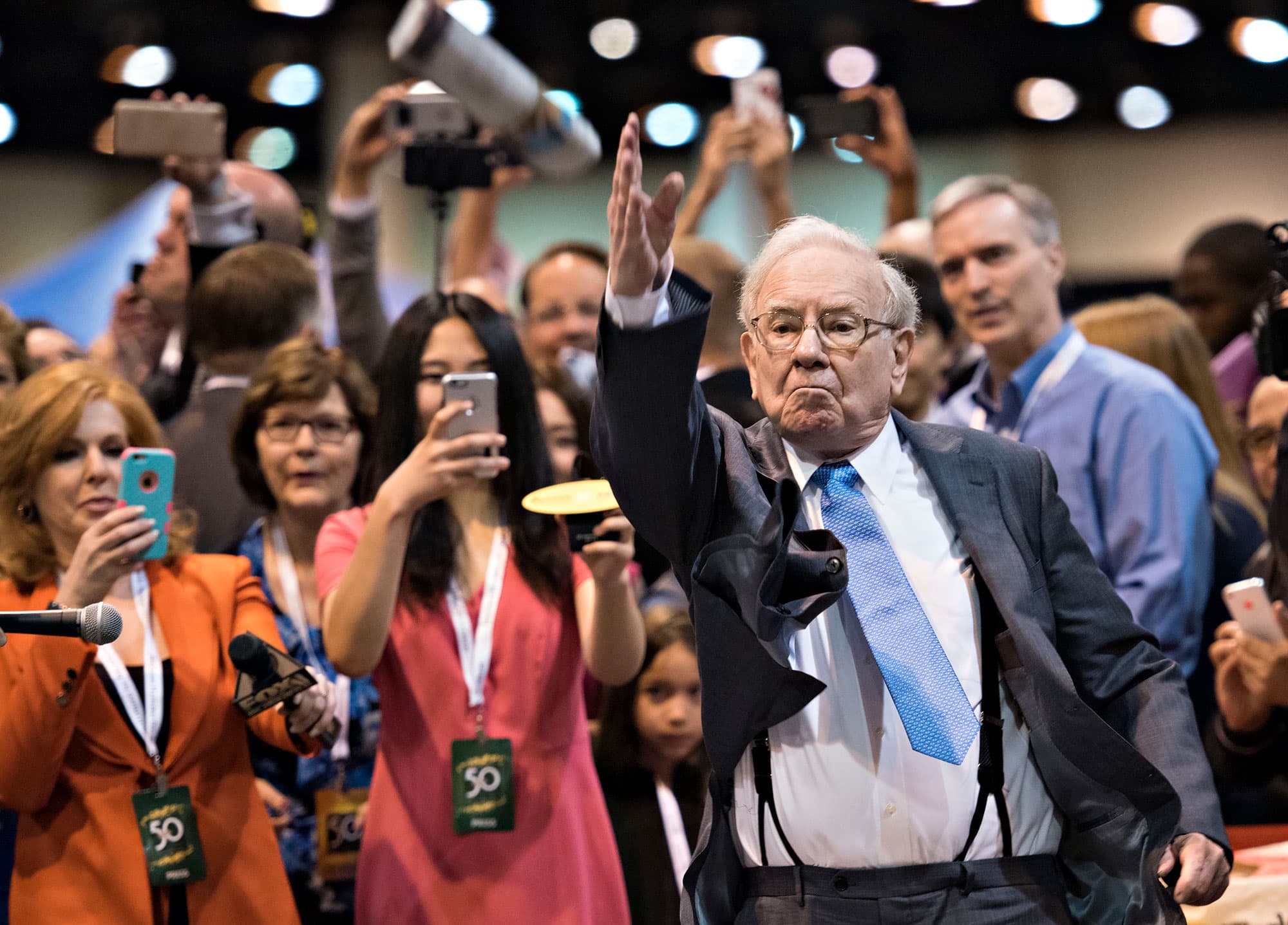
Warren Buffett, Berkshire Hathaway Inc. chairman and chief executive officer, tosses a newspaper as he tours the exhibition floor during the Berkshire Hathaway Inc. annual shareholders meeting in Omaha, Nebraska.
Daniel Acker | Bloomberg | Getty Images
Warren Buffett's Berkshire Hathaway is leaving the newspaper business and selling its operations to publisher Lee Enterprises for $140 million in cash.
The deal includes Berkshire Hathaway Media Group and The Buffalo News, a paper covering western New York and owned as a separate entity by Berkshire.
Lee said the purchase of Berkshire's newspaper assets will "add significant size and scale" to its operations, lift its portfolio of daily newspapers to 81 from 50 and nearly double its audience.
In a statement released with Lee's announcement, Buffett said: "My partner Charlie Munger and I have known and admired the Lee organization for over 40 years. They have delivered exceptional performance managing BH Media's newspapers and continue to outpace the industry in digital market share and revenue."
"We had zero interest in selling the group to anyone else for one simple reason: We believe that Lee is best positioned to manage through the industry's challenges," he added.
Lee said the acquisition will have an immediate boost to profitability and will cut its leverage ratio — a measure of a business's debt as part of its total capital — before any cost and revenue synergies.
The deal will include local news organizations such as the Omaha World-Herald in Nebraska and the Tulsa World in Oklahoma. Davenport, Iowa-based Lee Enterprises already owns outlets such as the St. Louis Post-Dispatch and The Bismarck Tribune in North Dakota.
"This highly collaborative relationship has driven digital and subscription revenue growth, margin expansion and continued innovation," Lee CEO Kevin Mowbray said in a release.