Kamis, 12 September 2019

European Central Bank launches new bond-buying program - CNBC

Mario Draghi, President of the European central Bank (ECB) attends a news conference on the outcome of the Governing Council meeting at the ECB headquarters in Frankfurt, Germany, March 7, 2019.

Kai Pfaffenbach | Reuters

The European Central Bank (ECB) announced a massive new bond-buying program Thursday in a bid to stimulate the ailing euro zone economy.

The central bank's quantitative easing program will entail 20 billion euros ($21.9 billion) per month of net asset purchases for as long as it deems necessary.

The central bank also cut its main deposit rate by 10 basis points to -0.5%, a record low but in line with market expectations.

The ECB now expects interest rates to remain at their present or lower levels until it has seen its inflation outlook "robustly converge to a level sufficiently close to but below 2% within its projection horizon, and such convergence has been persistent."

Additionally, the ECB changed its TLTRO (targeted long-term refinancing operations) rate to provide more favorable bank lending conditions and match that of its refinancing rate, erasing a previous 10 basis point spread.

A new system will see borrowers receive preferential rates if their eligible net lending exceeds a benchmark, providing an incentive for banks to use that money.

In line with market expectations, the ECB also introduced a two-tier rate system, a measure encouraged by the heads of various major European banks during the latest earnings season. More details are expected on this at a press conference later this afternoon.

Markets had widely expected some form of stimulus package, though hawks within the European Central Bank (ECB) Governing Council had moved in recent weeks to downplay the scale of the impending measures.

A slowing euro zone economy, persistent low inflation and the U.S.-China trade war had all pointed toward the central bank being forced to inject stimulus.

Recent economic data has not been promising, though the latest Purchasing Managers' Indexes (PMIs) had indicated some stability despite enduring industrial weakness.

Market reaction

The pan-European Stoxx 600 index jumped 0.6% immediately after the first announcement, as markets reacted positively to ECB President Mario Draghi delivering on expectations of a "bazooka" stimulus package.

Euro zone bond yields tumbled and the euro weakened as a result of the new measures. Germany's benchmark 10-year bond yield tumbled 8 basis points to -0.64% while the euro slid back below $1.10.

European banking stocks plunged, however, giving back early gains to slip 0.9% below the flatline.

Artur Baluszynski, head of research at Henderson Rowe, said the ECB pushing rates further into negative territory is "essentially a tax on euro zone banks, and for the already weakened bank-financed economy like the euro zone, this move could spell more trouble."

"Also, with the Fed still being the tightest of the G-7 central banks, the eurodollar liquidity could come under pressure adding further stress to the increasingly challenged European banking system," he added.

Let's block ads! (Why?)


https://www.cnbc.com/2019/09/12/european-central-bank-launches-new-bond-buying-program.html

2019-09-12 11:47:09Z
52780380052099

Aurora Cannabis: Are Its Q4 Results Good or Bad News? - Market Realist

Aurora Cannabis (ACB) is a prominent player in the cannabis industry. After Canopy Growth reported disastrous results last month and took a piece out of the cannabis sector, investors waited for Aurora Cannabis’s earnings. The company reported its fourth-quarter results on Wednesday after the market closed. Did the company impress investors?

Did Aurora Cannabis deliver as promised?

Aurora Cannabis generated a net revenue increase of 52% to 98.9 million Canadian dollars YoY (year-over-year) in the fourth quarter. The company missed its revenue guidance, which was 100 million–107 million Canadian dollars. The company also missed analysts’ estimate of 108.2 million Canadian dollars.

Aurora Cannabis didn’t deliver most of its promises when it increased the guidance. However, the results weren’t completely bad news.

Notably, the company’s net cannabis revenues were in line with the guidance. The revenues rose 61% sequentially to 94.6 million Canadian dollars. The company expected growth in all of its business segments. Canadian consumer cannabis revenues rose 52% to 44.9 Canadian dollars. Medical cannabis revenues also rose 10% to 29.7 million Canadian dollars. The company’s wholesale revenues were around 20.1 million Canadian dollars.

Aurora Cannabis expected an increase in the cash cost to produce per gram and gross margin. The gross margin on cannabis net revenues rose  3% to 58% sequentially. However, the cash cost to produce per gram fell 20% sequentially to 1.14 Canadian dollars per gram.

What drove the revenues and gross margin?

There was growth in all of the business segments in Aurora Cannabis’s fourth-quarter results. Notably, higher production capacity and supply from Aurora Sky and Aurora River drove the revenues. A decline in the cash cost to produce per gram drove the gross margin. A higher gross margin on bulk sales also drove the gross margin. The cannabis produced in the fourth quarter rose to 29,034 kilograms compared to 15,590 kilograms. Higher production capacity by the Aurora Sky, Aurora River, and Ridge facilities contributed to the increased production.

Did Aurora Cannabis’s profitability increase?

Aurora Cannabis expected to report a positive EBITDA. However, the company reported a negative EBITDA of 11.7 million Canadian dollars. The EBITDA was lower than analysts’ estimate of 19.5 million Canadian dollars and the EBITDA during the same period last year.

We know why a positive EBITDA is important for a company. Most of the cannabis players reported a negative EBITDA in their recent quarter, which implies that their operational costs are higher. The Canadian consumer channel continues to pose a challenge for Aurora Cannabis. The company is working with its regulatory and channel partners to streamline distribution to improve profitability.

Tilray might report a negative EBITDA of $17.5 million in the third quarter, which is lower than its EBITDA in the third quarter of 2018. The company might report a loss of $0.31 per share in the third quarter compared to a loss of $0.20 per share in the third quarter of 2018.

Canopy Growth (CGC) (WEED) reported a negative EBITDA of 92.06 million Canadian dollars in the first quarter of 2020. The company also reported wide losses of 0.30 Canadian dollars per share.

Aphria (APHA) reported a negative EBITDA of 0.2 million Canadian dollars in the fourth quarter. However, the company reported a profit of $0.05 per share in the fourth quarter.

Management’s view

For fiscal 2019, Aurora Cannabis’s revenues rose 349% to 247.9 million Canadian dollars. The gross margin also increased to 55% compared to 65% in 2018.

Talking about the results and outlook, Aurora Cannabis’s CFO, Glen Ibbott, said, “We continue to see strong growth in cannabis revenues in both medical and consumer categories. Our cultivation execution continues to drive production costs lower and improve gross margins. Aurora’s diversified product portfolio remains in demand with patients and consumers alike.”

Aurora Cannabis’s stock performance

Aurora Cannabis has gained 18%, while Aphria and Canopy Growth have gained 10.2% and 16.2% in September. The company closed 3.3% higher yesterday. However, Aurora Cannabis is trading 8.1% down in pre-market trading today.

The Horizons Marijuana Life Sciences ETF (HMMJ) has gained 6.7% in September. HMMJ tracks the North American cannabis industry. Tilray fell in August after its results. However, the company has increased 20% in September.

What’s the next step?

All of the cannabis companies are gearing up for Cannabis 2.0—the second phase of cannabis legalization in Canada. Cannabis 2.0 will legalize edibles, cannabis-infused beverages, extracts, and various other products. To learn more, read Cannabis 2.0 Legalization: Canada Is Ready.

Aurora Cannabis’s management said, “With the Canadian launch of derivative products in the coming months, we have made the necessary investments to ensure readiness and focus on a variety of value-added products. We are very excited to supply an expanded consumer market with premium cannabis and new product forms.”

Along with Canopy Growth, Tilray, Cronos Group, and other Canadian cannabis companies, Aurora Cannabis plans to expand its edibles business after legalization.

Aurora Cannabis plans to have a strong product lineup ready to launch in December. The company doesn’t expect increased revenues from the edibles business. However, the company is optimistic that the adjusted EBITDA could improve in the future due to higher revenue growth and an improvement in the gross margin. The company also plans to advance its hemp business in the US with the passing of the US Farm Act.

Cannabis industry

We know how important regulations are for the cannabis industry. I think cannabis players could benefit from federal marijuana legalization. Regulation violations hit the industry hard in the last few months. As a result, presidential candidates are pushing for legalization. Aurora Cannabis mentioned that it’s taking steps to ensure that its expansion in the US market meets state and federal laws. To learn more, read Cannabis: While the US Waits, the World Opens Up.

So far, September has been good for cannabis companies. Markets and analysts were optimistic about Aurora Cannabis’s results. Will the company’s results take a toll on the sector? The company will hold its earnings call today when the market opens.

We’ll provide an in-depth review of Aurora Cannabis’s fourth-quarter results after its earnings call.

Let's block ads! (Why?)


https://marketrealist.com/2019/09/aurora-cannabis-are-q4-results-good-bad-news/

2019-09-12 11:39:28Z
52780380408934
Walmart is expanding its 'unlimited' grocery delivery service nationwide - CNBC

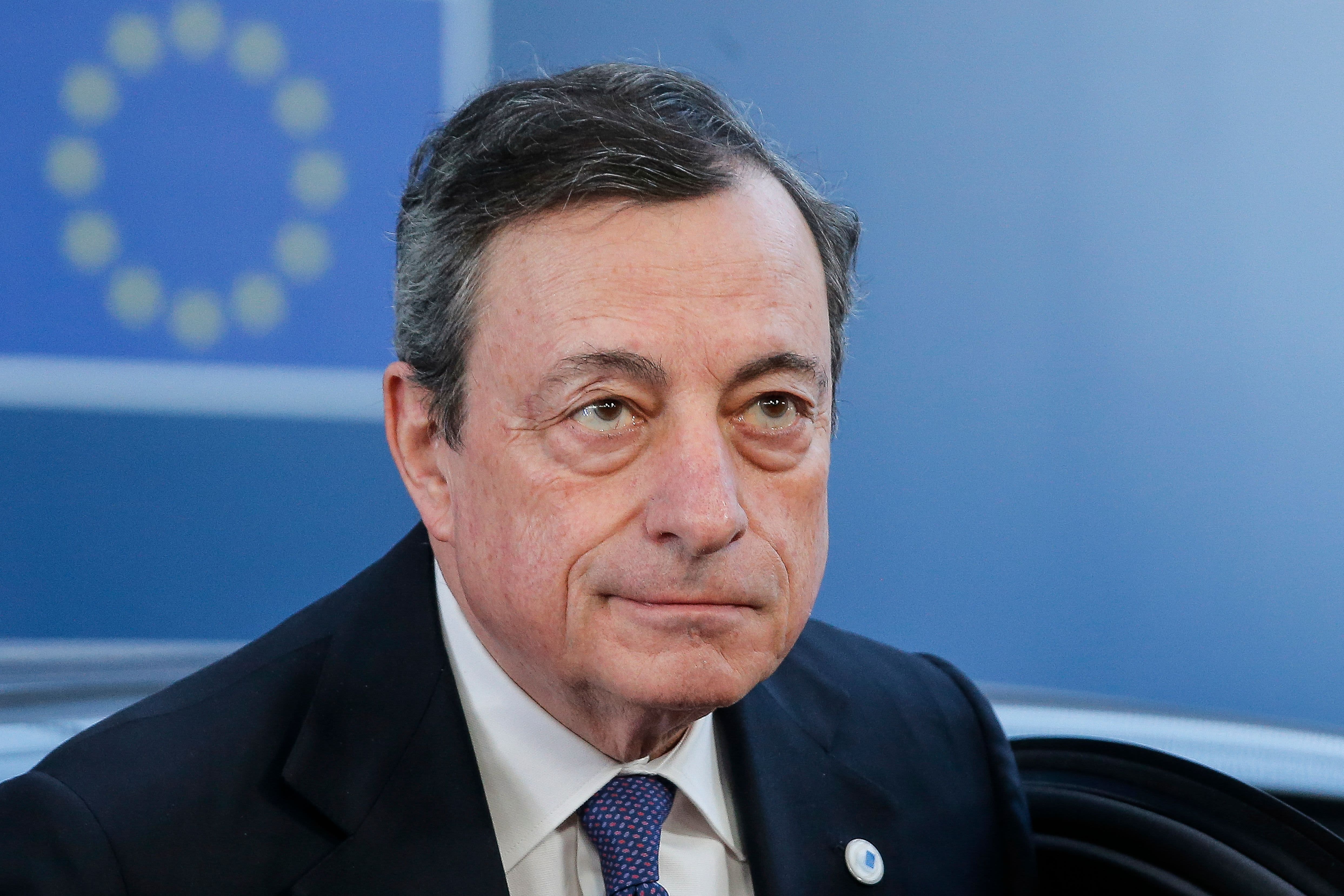
A man pushes his shopping cart past bread for sale at a Walmart Supercenter store in Rosemead, California on May 23, 2019.

Frederic J. Brown | AFP | Getty Images

Walmart said Thursday it will be expanding a new "unlimited" grocery delivery service, which costs users $98 annually, to 1,400 stores this fall.

The biggest retailer in the world had earlier this year been testing what it calls Delivery Unlimited in four markets — Houston, Miami, Salt Lake City and Tampa. As part of the nationwide rollout, it said the service will be available in 200 metro areas where it already has regular grocery delivery, reaching more than 50% of the U.S. population, by the end of the year.

Walmart's Delivery Unlimited gives shoppers the option to pay either $98 per year or $12.95 per month to receive unlimited grocery delivery orders to their homes. Typically, on an order-by-order basis, delivery would cost an additional $9.99. In addition to fresh produce, meat and bakery items, some general merchandise is offered under the new unlimited service, the company said.

"We've been investing in our online grocery business by quickly expanding our Grocery Pickup and Delivery services. Delivery Unlimited is the next step in that journey," Tom Ward, senior vice president of Walmart's digital operations in the U.S., said in a statement. "By pairing our size and scale and these services we're making Walmart the easiest place to shop."

Walmart said it has more than 45,000 personal shoppers helping it pack grocery orders for customers every day. It says these people must complete three weeks of training before they can begin that work.

This nationwide rollout builds on a strong grocery business that Walmart has already been amassing in the U.S. It has an online grocery order pickup option, for example, available at nearly 3,000 stores today.

Other retailers offer similar options, with which Walmart is trying to compete.

Target owns delivery platform Shipt, where users can pay $99 per year to have certain items, including groceries, delivered same day. Amazon's Prime membership has an annual fee of $119, in order to have perks like free same-day delivery and discounts at Whole Foods Market. FreshDirect and Instacart are other competitors in the space.

Meanwhile, Walmart is also this fall testing delivering groceries directly inside customers' homes.

Walmart shares are up nearly 25% this year.

Let's block ads! (Why?)


https://www.cnbc.com/2019/09/12/walmart-expands-its-unlimited-grocery-delivery-service-nationwide.html

2019-09-12 09:08:35Z
CAIiEHQfpixISITSFuTV2qBq9lUqGQgEKhAIACoHCAow2Nb3CjDivdcCMJ_d7gU

Stocks look to continue rally on trade optimism - Fox Business

U.S. Stocks are pointing to another up session as the fog surrounding the trade war between the U.S. and China seems to be lifting.

Continue Reading Below

The two sides have in recent days softened their stance.

Dow Industrial futures are gaining 0.2 percent, S&P 500 futures are adding the same and Nasdaq futures are up by 0.3 percent.

MORE FROM FOXBUSINESS.COM

Investors drew encouragement from China's decision to exempt some U.S. products from a recent round of tariffs.

As a gesture of "goodwill," President Trump said on Twitter on Wednesday that the United States agreed to a two-week delay in a planned increase in tariffs on some Chinese imports.

The moves could indicate that both sides are settling in for an extended conflict even as they prepare for talks in Washington aimed at ending the dispute that threatens global economic growth.

On Wednesday, the S&P 500 rose 0.7 percent, the first time it has finished above 3,000 points since July 30. The Dow Jones Industrial Average gained 0.8 percent, while the Nasdaq picked up 1.1 percent.

TickerSecurityLastChange%Chg
I:DJIDOW JONES AVERAGES27137.04+227.61+0.85%
SP500S&P 5003000.93+21.54+0.72%
I:COMPNASDAQ COMPOSITE INDEX8169.678346+85.52+1.06%

In Asia on Thursday, Japan's Nikkei gained 1.1 percent, Hong Kong's Hang Seng index slipped 0.2 percent and China's Shanghai Composite picked up 0.2 percent.

Expectations are that the European Central Bank will kick off another wave of monetary easing by global central banks on Thursday morning.

CLICK HERE TO READ MORE ON FOX BUSINESS

Investors continue to expect the Federal Reserve will cut interest rates at its meeting next week in another bid by the central bank to help maintain U.S. economic growth.

The Fed raised its benchmark interest rate in July by a quarter point. That was its first hike in a decade.

The Associated Press contributed to this article.

Let's block ads! (Why?)


https://www.foxbusiness.com/markets/us-stocks-sept-12-2019

2019-09-12 06:19:52Z
CBMiOmh0dHBzOi8vd3d3LmZveGJ1c2luZXNzLmNvbS9tYXJrZXRzL3VzLXN0b2Nrcy1zZXB0LTEyLTIwMTnSAT5odHRwczovL3d3dy5mb3hidXNpbmVzcy5jb20vbWFya2V0cy91cy1zdG9ja3Mtc2VwdC0xMi0yMDE5LmFtcA

The world's biggest brewer may resurrect its massive Hong Kong IPO - CNN

The world's biggest brewer said in a statement Thursday that there is no assurance that the transaction will go through "and the decision to proceed will depend on a number of factors and prevailing market conditions."
Asian stock markets have been turbulent this year, largely because of the trade war between the United States and China. Hong Kong's Hang Seng Index is down 5.1% since the beginning of July, hit by a political crisis that has seen months of mass demonstrations.
AB InBev was hoping to raise as much as $9.8 billion by listing Budweiser Brewing Company APAC, the largest brewer in Asia by retail sales, before pulling the planned July offering. The IPO would have topped Uber (UBER), which raised $8.1 billion in New York in May.
The Budweiser beer empire was built on debt. Now it's racing to pay it off
AB InBev could use the funds to reduce its massive debt load. The company has already made moves to steady its balance sheet, cutting its dividend in half last last year and unloading its Australian business for $11.3 billion in July.
AB InBev became the world's top brewer by borrowing money to fund a series of acquisitions. The company's most recent mega purchase, of SABMiller, increased its debt to $102.5 billion in 2018.
An Asia IPO could also help the company in China, the world's largest market for beer. AB InBev's sales in the country grew 8.3% last year, with brands like Budweiser and Corona performing especially well.
The listing would be a win for the Hong Kong Stock Exchange. Reports emerged last month that internet giant Alibaba (BABA) would delay plans to raise $15 billion through a secondary listing in Hong Kong amid the ongoing political unrest. Alibaba declined to comment at the time.

Let's block ads! (Why?)


https://www.cnn.com/2019/09/12/investing/ab-inbev-ipo/index.html

2019-09-12 04:37:00Z
52780380913838

Rabu, 11 September 2019

Trump says Fed 'boneheads' should cut interest rates to zero 'or less,' US should refinance debt - CNBC

President Donald Trump on Wednesday continued his verbal assault on the Federal Reserve, which he blames for slowing the economy, tweeting that the central bank should cut interest rates to zero or even set negative interest rates. The president also called Fed officials "boneheads" in the tweet.

"The Federal Reserve should get our interest rates down to ZERO, or less, and we should then start to refinance our debt. INTEREST COST COULD BE BROUGHT WAY DOWN, while at the same time substantially lengthening the term," he said.

The president also made a new suggestion not seen in some of his past attacks on the Fed, saying that the country should refinance its debt load. The U.S. has $22.5 trillion in debt, $16.7 trillion of which is owed by the public. 

That debt load has grown $2.6 trillion, or 13% under Trump, due in part to the 2017 tax cut that Trump shepherded through Congress. The idea for "refinancing" federal debt is without any modern precedent.

"It's not viable and could be a significant problem for investors, financial markets and ultimately the economy," said Mark Zandi, chief economist at Moody's Analytics. "The debt is not prepayable. There's a contractual relationship the Treasury has with investors. This isn't a mortgage, this is U.S. Treasury debt. I think it would be incredibly disruptive to financial markets, and interest rates would ultimately rise, not fall."

On Trump's push for zero or negative rates, Zandi said he doesn't see much benefit.

"The question you have to ask yourself is, if we go down to zero and we actually experienced a recession, then what?" he said. 

'It's a bold idea'

It's unclear how the refinancing idea would work. The Treasury Department likely would have to be involved, and there have been calls recently to issue longer-term debt, such as a 50- or 100-year Treasury.

"From a theoretical standpoint, obviously it would be wonderful for the United States government over a period of years if it were to lengthen the maturities on debt that would have rates below 1%," said banking analyst Dick Bove at Odeon Capital Group. "It would certainly be beneficial to the United States government. Whether it would be beneficial to the United States economy is an open question."

Cutting rates to zero or below would cheapen debt costs but also make the U.S. a less desirable spot for capital flow as the ability to generate yield would become more difficult.

The Fed is expected to approve another quarter-point rate cut at its meeting next week, following July's reduction that was the first such move in 11 years. Markets foresee one more reduction before the end of the year and another in early 2020.

While central bank officials have said they would expect rates to go close to zero in the event of another recession, Fed Chairman Jerome Powell said Friday he does not see a downturn on the horizon.

"If we ever went to negative interest rates, the money would stop coming into the United States and it would start flowing to wherever investors could find reasonable return that was positive," Bove said. "That would slow the growth of the private sector. It's definitely uncharted territory. It's a bold idea. On balance, I think it would be harmful." 

Trump had made a suggestion during the 2016 presidential campaign that would have involved renegotiating the debt. That idea then was widely dismissed as a move the actually could drive Treasury yields higher, jeopardize the nation's standing among its creditors and pose a threat to the U.S. dollar as the world's reserve currency.

During a CNBC interview in May 2016, Trump said that if the economy turned south, he would try to get creditors to accept partial payment on U.S. debt.

"I would borrow, knowing that if the economy crashed, you could make a deal," he said then.

His idea was that the U.S. would pay less than face value on the Treasury debt it issues to cover the burgeoning budget deficit. However, doing so would only increase the costs of issuing the debt as creditors would demand higher interest payments.

Trump has long bemoaned Fed policy, saying the central bank should get more in line with the near-zero rates employed by the nation's global competitors. The Fed currently targets its benchmark overnight lending rate in a range between 2% and 2.25%, the highest of any G-7 nation.

In previous tweets, he has repeatedly ripped his own appointee, Powell, as being out of step with the economic needs in the U.S.

"The USA should always be paying the the lowest rate. No Inflation! It is only the naïveté of Jay Powell and the Federal Reserve that doesn't allow us to do what other countries are already doing. A once in a lifetime opportunity that we are missing because of "Boneheads," Trump said in Wednesday's tweets.

Let's block ads! (Why?)


https://www.cnbc.com/2019/09/11/trump-says-fed-boneheads-should-cut-interest-rates-to-zero-or-less-us-should-refinance-debt.html

2019-09-11 10:49:16Z
52780379740978

Hong Kong makes $37 billion bid for the London Stock Exchange - CNN

Hong Kong Exchanges and Clearing (HKXCF) (HKEX) said Wednesday it had made a proposal to the board of the LSE (LNSTY) to "combine the two companies" in a cash and share deal worth £29.6 billion, or £31.6 billion ($39 billion) including debt.
The deal would "redefine global capital markets for decades to come," HKEX CEO Charles Li said in a statement.
It would reinforce Hong Kong's position as the key connection between mainland China, Asia and the rest of the world, HKEX said.
The announcement comes hot on the heels of the LSE's £22 billion ($27 billion) deal to acquire financial data company Refinitiv. That deal is aimed at transforming the LSE into a global markets and information juggernaut to rival Michael Bloomberg's financial data empire.
Shares in the LSE spiked as much as 11% on the news of Hong Kong's offer, before trimming those gains slightly.
In a statement, the LSE described the offer as "unsolicited, preliminary and highly conditional."
"The board ... will consider this proposal and will make a further announcement in due course," it said, adding that it remained committed to its proposed acquisition of Refinitiv and expected to write to shareholders seeking their approval for that deal in November.
Hong Kong's offer comes at a sensitive time. Brexit uncertainty is casting a shadow over London's role as a global financial center. At the same time, Hong Kong — Asia's premier financial hub — has been rocked by months of pro-democracy protests.
HKEX said it would seek a secondary listing of its shares on the LSE after the transaction was completed to reflect its commitment to the United Kingdom.

Let's block ads! (Why?)


https://www.cnn.com/2019/09/11/investing/hong-kong-london-stock-exchange/index.html

2019-09-11 10:28:00Z
CAIiEEKA6qnFlwetAfWHk0SsCz4qGQgEKhAIACoHCAowocv1CjCSptoCMPrTpgU