The recall affects Honda and Acura automobiles in the United States.
Honda urged owners of affected vehicles to seek free replacements immediately at authorized dealers.
Honda is ahead of the National Highway Traffic Safety Administration's schedule for replacing the Takata airbag inflators, the carmaker said in a statement. Honda said it has made "significant progress with existing recall repairs," with an 83 percent completion rate. The company has enough replacement parts, all from alternative suppliers, to repair affected Acura and Honda models, it said.
Honda in March confirmed 14 deaths and more than 200 injuries in the US related to Takata airbag driver's front inflator ruptures. Another company's vehicles were involved in two other US fatalities, Honda said.
A chemical drying agent used in the inflators could cause airbags to rupture, Takata said. Upon bursting, some Takata airbags caused shrapnel to explode forward into passengers and drivers, injuring or killing some.
The faulty inflators resulted in the recall of tens of millions of vehicles worldwide. It was the largest automotive recall in US history, with some 37 million cars in the US from 19 automakers affected.
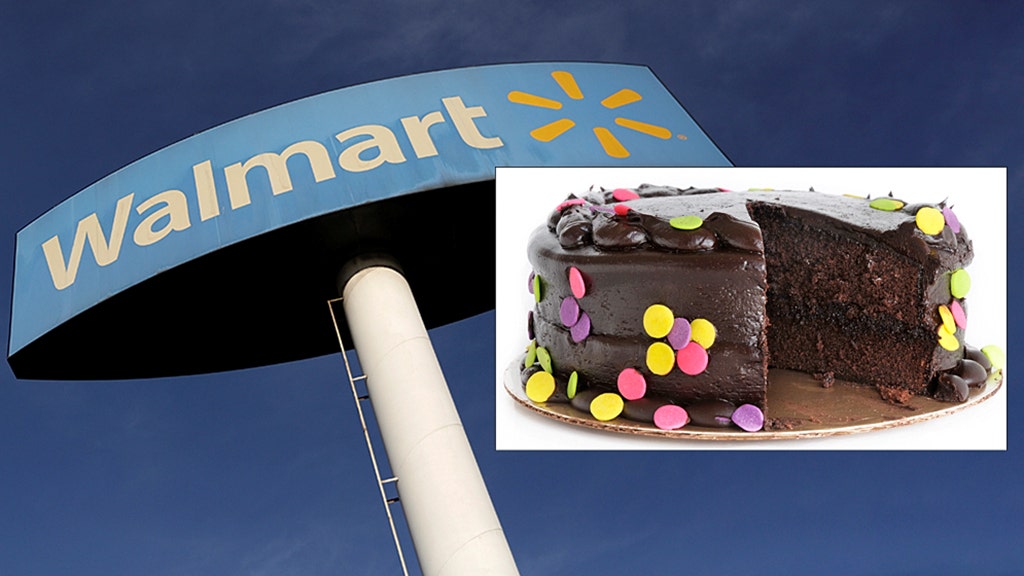
A Texas woman was banned from her local Walmart after police say she ate half a cake and refused to pay for the missing portion.
Wichita Falls Police were called to a Walmart on Greenbriar Road just after 8:00 p.m. Tuesday after receiving calls that a woman walked around the store eating half of a cake and refusing to pay for the whole item, Department Spokesman Officer Jeff Hughes told the Wichita Falls Times Record News.
The suspect, who has not been identified, entered the bakery section of the store and proceeded to eat half of a cake while walking through the aisles, WWOR reported citing Wichita Falls Police Department.
Once at the register, the woman demanded half off because she was only buying half a cake. Police say she refused to pay for the missing half of the cake despite eating it on her way to checkout.
She ultimately paid for the whole cake once police arrived and was barred from the store for theft.
A similar incident took place at another Wichita Falls Walmart earlier this year when another woman was banned after police say she rode around the parking lot in an electric cart while drinking wine from a Pringles can, Fox 46 report.
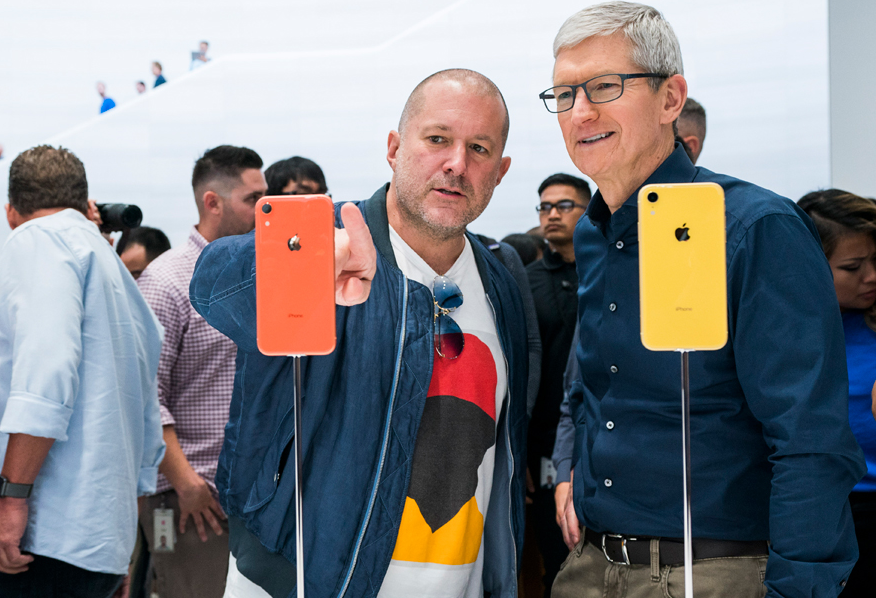
We probably won't be seeing photos of Cook and Ive together like this in future. (Source: Apple)
Apple fans were shocked by news that legendary design guru Jony Ive is leaving the company. While Ive has undoubtedly contributed significantly to numerous iconic Apple designs in the past, he is not, however, leaving Apple on a design high.
Jony Ive will always be an Apple icon. Behind co-founders Steve Jobs and Steven Wozniak, Ive is perhaps the most significant figure in the company's history. His partnership with Steve Jobs during Jobs' second coming as Apple CEO took Apple out of the doldrums and helped position it to become the largest and most successful technology company in history. Who can forget the iconic Bondi Blue iMac G3 (1998-2003) that helped to turn the company's fortunes? It was the first of a succession of iconic designs including several iPods and then of course the 2007 iPhone which initiated the second Apple-triggered computing revolution after the original Apple II.
However, Ive leaves Apple not on a product design high. Arguably the last properly iconic design to come from directly under his tenure was the iPhone 5 (which was then rehashed for the iPhone SE). Over the past few years, however, rehashed designs have become the hallmark of Apple flagship products. Apple is no longer the design leader on the market with plenty of other smartphone makers and even PC makers stepping in to take away Apple's mantle. As I wrote recently for Notebookcheck, Apple is becoming synonymous with boring as a result, even if it continues to be spectacularly successful on the whole.
Steve Jobs once said, "There's an old Wayne Gretzky quote that I love. I skate to where the puck is going to be, not to where it has been. And we've always tried to do that at Apple." This is not Apple today under CEO Tim Cook. Its MacBooks are very conventional, save, for the questionable Touch Bar and its flaghship iPhone is headed for a third year fundamentally unchanged, unsightly display notch included. In fact, the competition is doing a better job of skating to where the puck is going to be.
Vivo's APEX Concept Phone 2019 is a perfect example. It is fashioned from a single unibody glass structure that is both buttonless and portless -- it is the kind of stunning and perhaps controversial design that we used to expect Apple to deliver first. Same too for the Asus Zenbook Pro Duo, which features an advanced dual touch screen design that leaves Apple MacBooks eating its dust for innovative design. There are many other examples of both smartphone and notebook designs from Android and PC makers that eclipse Apple's offerings for things like display resolution and other design features that we used to expect it to deliver first -- Oppo's breakthrough in-display selfie camera is but another example of this.
The past few years have seen Jony Ive focused primarily on bringing Jobs' vision for the Apple Park campus to life and it is undoubtedly an iconic building design; but that is not what will, or has, defined Apple - this is has always been its hardware. Under Tim Cook (who has been content to penny pinch by the said rehashing of product designs knowing they will sell to the Apple faithful anyway), Apple is pivoting to offset declining iPhone sales by focusing more on software and services. Little wonder that Ive is just the latest of several Apple product designers to leave the company. Notably, he is also taking the highly regarded Australian-born designer Marc Newson with him to form LoveFrom, Ive's new design studio.
Although Apple and Ive have been at pains to point out that Ive's relationship with Apple will continue as the first design client for LoveFrom, it will focus on the only Apple product in recent times that has held interest for Ive - the Apple Watch. This is where both Ive and Newson expended most of their energies. Perhaps only the new Mac Pro design also bares significant input of the two designers and the timing of Ive's departure following its recent launch suggests that this in fact the case. While everyone can see that the new Mac Pro will be a more effective product solution than the circular "trash can" Mac Pro it replaces, the 2013 design is arguably more iconic, if not simply more adventurous.
So, Ive leaves Apple not on a design high, but at a time where much of its product line is comprised of rehashed designs. While nice enough, noneare the kind of cutting-edge industrial designs that made Apple the envy of the consumer technology market. Given this scenario, it is not like Apple is going to especially miss him. In his role as Chief Design Officer (effectively akin to an emeritus professor title in an academic institution), Ive hasn't been central to the design of Apple's products for the past few years. And it probably shows. His interests have been elsewhere and starting up his own design firm is a natural evolution of where things have been heading. Five or ten years ago, losing Ive would have been a massive blow. Losing him now isn't going to dramatically shift day-to-day operations at Cupertino, even if the market has reacted with some shock at his departure.
The Food and Drug Administration said this week that it is continuing to investigate a troubling link between some pet food types and potentially fatal heart disease in dogs. As the investigation into any connection is ongoing, no pets foods have yet been recalled.
The FDA on Thursday provided additional insight into the possible link between the diets and canine dilated cardiomyopathy (DCM)—typically seen in large breeds like Doberman Pinschers and Great Danes, as well as Cocker Spaniels—which the agency said is being reported in dog breeds “not previously known to have a genetic predisposition to the disease.”
Advertisement
As of April 30, the FDA said it received 524 reports of DCM in both cats and dogs since the start of 2014, with 515 of those occurring in dogs. Of those, the FDA said that since Dec. 1, it has received reports of 219 cases in dogs and 3 cases in cats.
Cases reportedly overwhelmingly cited dry food formulations in pets’ diets, though the agency said that in some cases, other food types such as raw or wet were reported as well. The FDA said that reports were largely linked to grain-free formulations or those containing peas, lentils, or both, and in some cases potatoes. The protein sources reportedly included everything from commonly used chicken, lamb, and fish types, to venison, bison, and duck.
Advertisement
Thursday’s update revealed that the FDA is looking at a significant number of dog food brands across various pet food distributors. However, of the 16 most cited pet food firms linked to 10 or more reports, the leading six included Acana, Zignature, Taste of the Wild, 4Health, Earthborn Holistic, and Blue Buffalo.
The Food and Drug Administration
Advertisement
The FDA said that while it shared case information with distributors linked the reports, it has “not yet determined the nature of the possible connection between these foods and canine DCM” and therefore has not yet recalled any of the pet food. And while the FDA is not advising owners switch their dogs’ diets based on the report, it did recommend owners speak with their veterinarians about their dietary needs.
“Our ongoing work in this area is a top priority for the FDA, and as our investigation unfolds and we learn more about this issue, we will make additional updates to the public,” Steven M. Solomon, D.V.M., M.P.H., director of the FDA’s Center for Veterinary Medicine, said in a statement. “In the meantime, because we have not yet determined the nature of this potential link, we continue to encourage consumers to work closely with their veterinarians, who may consult a board-certified veterinary nutritionist, to select the best diet for their pets’ needs.”
Advertisement
The FDA further advised owners who observed possible signs of a heart condition in their pets to immediately seek veterinary care. The agency said symptoms can include weakness, cough, or collapse.
You could smell the hysteria at the news. Where will Apple, a company famous for its commitment to design and its famous designer, go from here? Sir Jonathan Ive's departure, however, may be less of a catastrophe than some think. What if, actually, this isn't just a good thing, but a sign of an even more positive future for Apple?
Apple has always prided itself on its culture, rather than its personnel. Tim Cook once said that Steve Jobs' greatest contribution to the company was its culture and work to nurture new talent within it. But Apple also lionized Ive as an embodiment of its design skill, as evidenced by his regular (much-parodied) appearances in product videos.
But Ive was never a single figure in Apple's design team, just the most famous -- and the most powerful. Apple may have avoided the PR shock if it had other designers who were similarly visible outside of the company. Some longstanding rumors suggest any potential successors to the Ive mantle were pushed out of the company by the designer himself.
Ive's departure may not hurt too much because Apple's hardware division isn't going to be the only thing the company is focusing on in future. The smartphone and tablet markets won't see the sort of explosive growth that they have done in the past. And, as the company pushes into services as a key vehicle for profit, there's less need for a superstar hardware designer hanging around.
It's not as if the iPhone and iPad, among other products, are going to see radical innovation now, anyway. Their forms are pretty settled at this point, and it must have been a challenge for Ive to come up with a new tweak on a design he (arguably) perfected in 2012. And even inside Apple, Ive has always sought to design other products, like a limited-edition Leica, Diamond Ring and a watch. Not to mention Ive giving notes on how Kylo Ren's lightsaber should work.
In fact, some of Ive's obsessions saw him butting up against the laws of physics in a way that he must have found frustrating. For someone who wanted his designs to be unobtrusive, the lens humps on the iPhone and iPad cameras must have rankled. Similarly, Intel chips have lagged sufficiently that a laptop redesign would be tough, these days. And Ive's desire to make thinner and lighter products sometimes made them less usable.
Take his infamous line from 2015, when Ive said that people were essentially using their phones in the wrong way. Rather than admit that his obsession with size and weight meant the iPhone battery was far too small, he blamed the user for their overuse. Similarly, the new MacBook Pro keyboard, built to shave precious millimeters from the laptop's body, has met plenty of derision.
On the other hand, his philosophy achieved the impossible feat of shrinking a phone into a device as small as the Apple Watch. It's a product that, for all its flaws, every one at Apple deserves praise for creating in an era of clunky wearables. But it wouldn't be a bad thing if Ive's successors, Evans Hankey and Alan Dye, loosen up on some of his more famous hangups. A gram of weight, here, for a bigger battery; a less elegant design for a more functional keyboard, there.
Neither figure has been in the spotlight much until now, but we can expect to see more of them in the near future. Both handled Ive's responsibilities for software (Dye) and hardware (Hankey) while he was working to finish Apple Park. So they're both used to the day-to-day parts of the job, without the increased scrutiny their new titles will involve.
In many ways, Ive leaves Apple with the most settled product line it has had in years, with the Mac Pro rounding out the set. The iPhone and iPad are both in rude health, and there's little more that can be done with the iMac these days. If Apple does make an ARM laptop in the near future, then it's likely Ive and his team have already designed and built the chassis for it.
We'll still be living in Jonathan Ive's world, it's just that he'll be off in his office, building a new toilet, or standard lamp... or something.
Tesla has given an update on the cause of a Model S battery fire that happened in Shanghai earlier this year after the government started putting pressure on electric automakers.
Following the accident, a few Nio electric SUVs also had thermal events in China and it led to a lot of attention on battery fires in the country.
The government asked automakers making electric vehicles to investigate fire risks and report on what they are doing to prevent their cars from catching on fire.
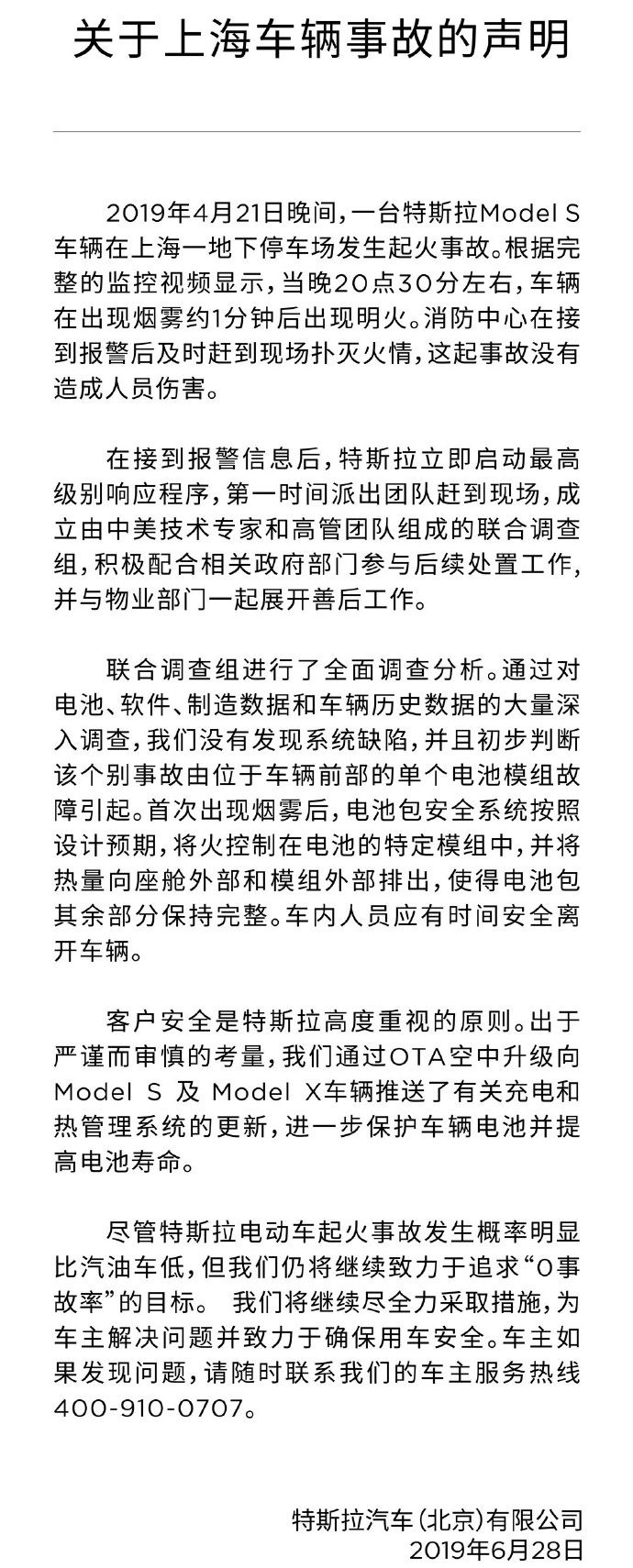
Today, Tesla also issued a statement on Weibo about the cause of the Shanghai fire and said that it didn’t find any defect in its system:
The automaker says that they conducted a “joint investigation” with “Chinese and American experts” who “didn’t find that the system has any defects.”
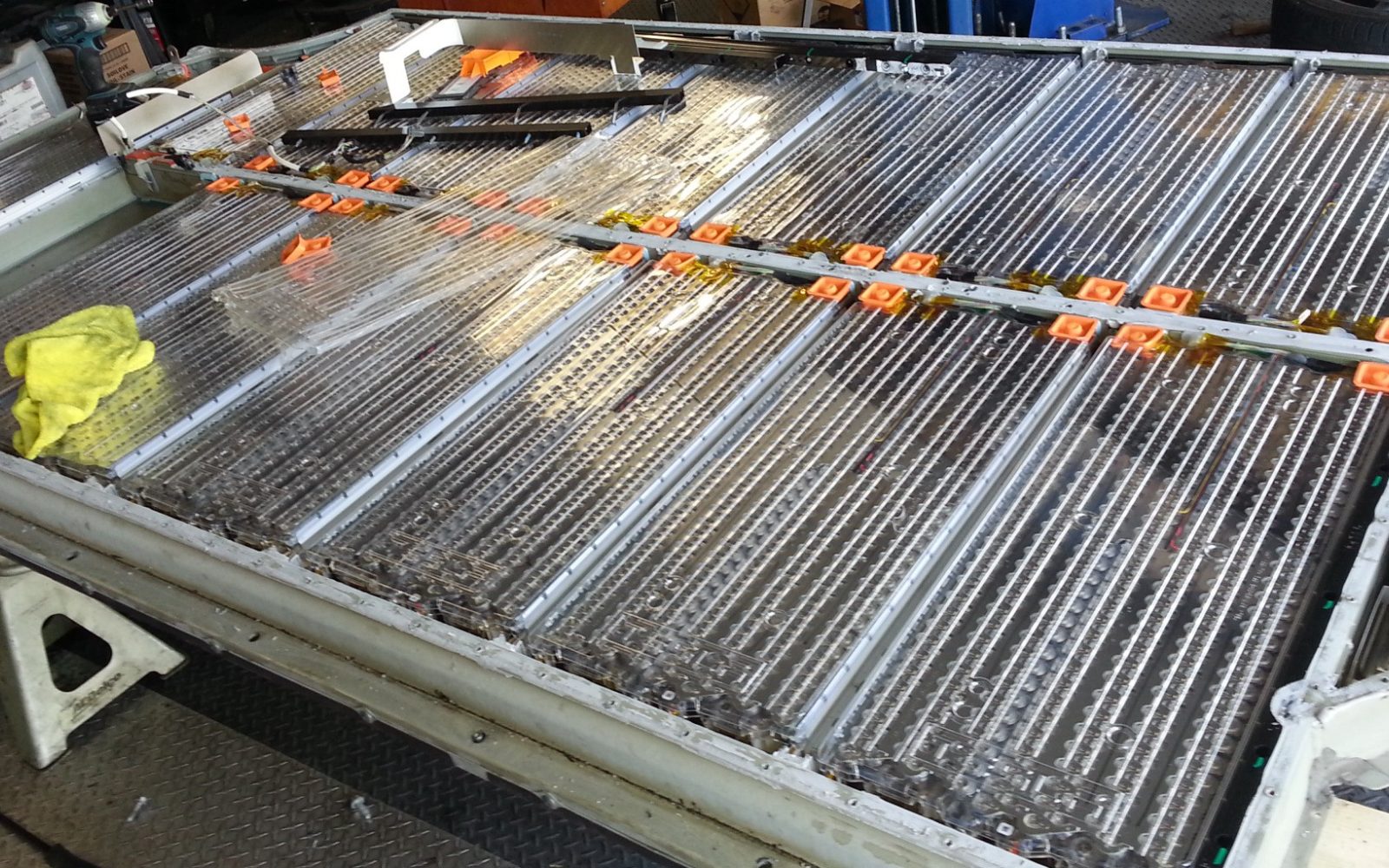
Tesla added that preliminary findings show the source of the fire as a single battery module at the front of the vehicle. Here’s a Tesla battery pack teardown exposing the battery modules:
However, they didn’t explain what in the battery module, which Tesla makes itself, could have caused it to ignite.
The automaker reiterated that it believes its vehicles are 10 times less likely to catch on fire than gasoline vehicles.
Electrek’s Take
While Tesla is correct to claim that gasoline cars are on average more likely to catch on fire than Tesla vehicles, that’s based on all vehicle fires and not just newer vehicles like Tesla’s cars.
In either case, it’s still statistically not something that people should be concerned about, but it’s obviously not the case, especially in China following those events.
That’s why Tesla needs to be transparent about its investigation into the cause of the fire when the vehicles are not involved in accidents.
As of now, it sounds like Tesla is just sharing the results of a preliminary investigation, because saying that the cause has been traced to a single battery module isn’t saying much.
They have already released a software update to make the thermal management system safer, but it sounds like they did so way before the findings from this incident.
Hopefully, they can learn more and it can lead to safer battery packs.