Rabu, 05 Juni 2019

Questions loom over Fed efforts to make sure the 'roof isn't leaking' - Yahoo Finance

The Federal Reserve is listening carefully for recommendations on better achieving its dual mandate of maximum employment and price stability, but expectations are tempered for what the Fed may ultimately do at the conclusion of its review process.

At a conference in Chicago, Fed officials heard from academics and other stakeholders with no shortage of ideas on how to best tweak the central bank’s monetary policy strategies. The review covered a lot of ground: from the way the central bank aims at its 2% inflation target, the metrics that it uses when evaluating maximum employment, and the available toolbox of “unconventional” policies during the next crisis.

“When things are strong is when you really need to make sure your roof isn’t leaking,” University of Michigan professor of public policy Susan Collins told Yahoo Finance on Tuesday. “This public conference is partly about that.”

Although it appears that a lot of changes are on the table, some say the Fed may ultimately end up on nothing more than some slight tweaks to its current monetary policy framework.

Average-inflation targeting

In particular focus is the Fed’s approach to inflation, where the central bank has persistently undershot the 2% inflation target that it adopted in 2012. Since then, readings of core personal consumption expenditures (the Fed’s preferred reading of inflation), have only touched or breached 2% once.

Policymakers have proposed variations of dynamic inflation targeting, ranging from a “nominal GDP targeting” strategy that targets spending levels to a temporary price-level targeting that allows the Fed to overshoot inflation when interest rates are near-zero.

Yet the expectation is that the Fed will ultimately land on something less radical: an average-inflation targeting scheme where the Fed would state its intention to aim for inflation above 2% to compensate for periods when inflation is below 2%.

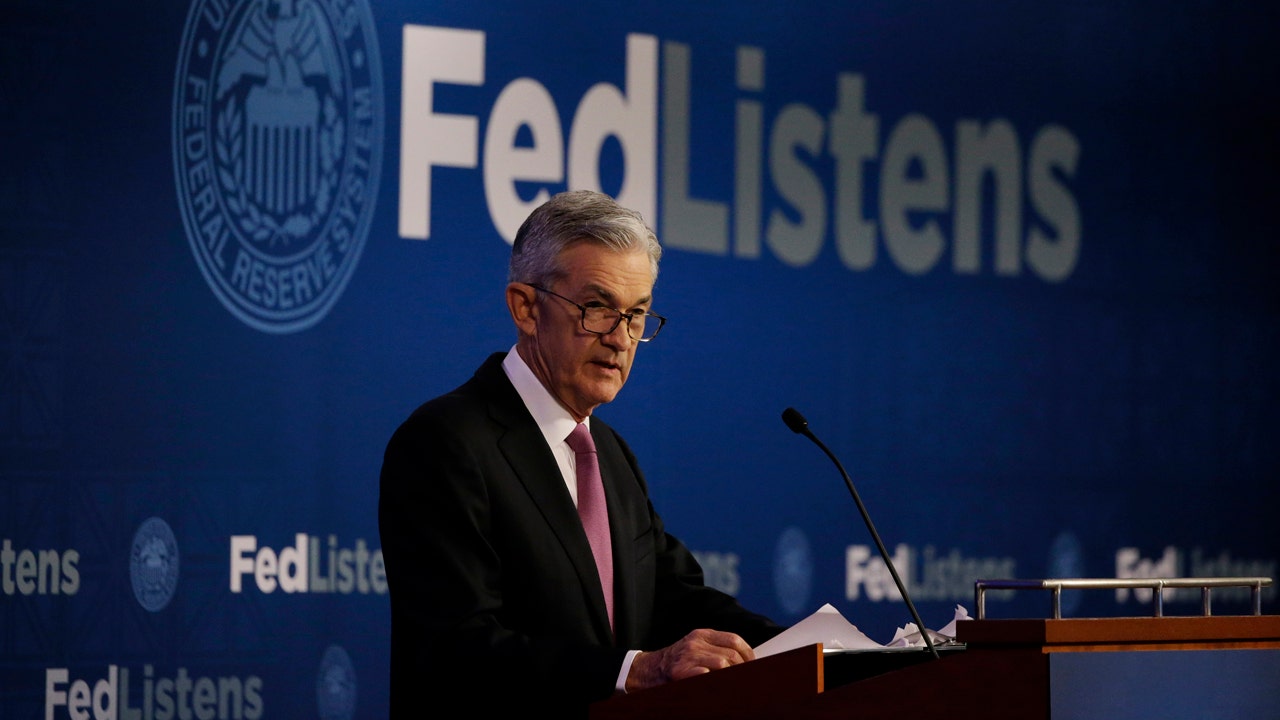
Jerome Powell, Chair, Board of Governors of the Federal Reserve speaks during a conference at the Federal Reserve Bank of Chicago on June 04, 2019 in Chicago, Illinois. The conference was held to discuss monetary policy strategy, tools and communication practices. (Photo by Scott Olson/Getty Images)

“Ultimately, our sense is that this conference will generate a considerable amount of headlines, but the likeliest tangible impact will be a fuller consideration of a shift to average-inflation targeting,” Compass Point’s Isaac Boltansky wrote in a conference preview note on June 3.

For his part, Powell has lowered expectations for the degree of expected change out of this review, saying in March that the process will more likely produce “evolution rather than revolution.”

Deutsche Bank wrote May 30 that they would characterize the review as “refining, rather than reinventing the wheel.” They are even more skeptical of a change in approach to inflation than Boltansky, writing that they do not believe the Fed will make any explicit commitment to make-up for a shortfall of inflation.

Being ‘bolder’ on inflation could be helpful

Collins said that while the Fed is listening to a wide variety of views, a lot of potentially helpful changes have been taken off the table.

One example: raising the 2% inflation target.

Some have criticized the 2% target for being arbitrary, sparking worries that the Fed may have given itself too little room on prices without providing proof for why 2% is the magic number.

“Some of us think that being a little bolder there would be helpful,” Collins told Yahoo Finance. But Collins said the Fed tends to stay away from making dramatic changes outside of crises, when it is forced to do so.

One paper presented at the conference suggested a 3% inflation target, for example. But the Fed has made it clear that it is going to keep its 2% target, and instead tweak its methodology for getting to that target.

The conference hosted a number of other papers, some with more modest suggestions and others with more dramatic proposals for change. For example, a discussion on Fed communications included a recommendation from University of California, Berkeley Professor Jón Steinsson to simply add a link to the Fed’s yearly statement on longer-run goals to its regular policysetting meeting statements to remind market participants that the Fed thinks beyond the short-run. Yet another paper on maximum employment from University of Maryland professors Katharine Abraham and John Haltiwanger challenged the Fed to come up with a whole new way to measuring the labor market beyond the currently available unemployment and unemployment gap statistics.

Modifying the dot plots

In question is also the Fed’s dot plots, which project the policymakers’ estimates for where the federal funds rate will be in the future. Although Powell has criticized the dot plots for being a “source of confusion” to markets at times, discussants at the conference Tuesday appeared to advocate for keeping them but making modifications to the way the Fed shares them.

paper from Brandeis’s Stephen Cecchetti and New York University’s Kermit Schoenholtz recommended that the Fed release a “matrix” that links projections for growth, unemployment, inflation, and interest rates to each FOMC participant.

Some in the room worry that such a disclosure would push the public to place too much emphasis on the Fed chair’s plot points.

Deutsche wrote that the dot plot is “unlikely to be eliminated,” writing that if the central bank does end up near zero interest rates again, it will need the plots again to offer forward guidance to the public.

In the mean time, the Fed is still working its way through its “Fed Listens” tour, which involves conferences across the country.

The Fed has said it will announce the findings of its review in the first half of 2020.

Brian Cheung is a reporter covering the banking industry and the intersection of finance and policy for Yahoo Finance. You can follow him on Twitter @bcheungz.

Read the latest financial and business news from Yahoo Finance

Follow Yahoo Finance on Twitter, Facebook, Instagram, Flipboard, SmartNews,LinkedIn, YouTube, and reddit.

Let's block ads! (Why?)


https://finance.yahoo.com/news/fed-conference-chicago-monetary-policy-framework-092419489.html

2019-06-05 09:24:00Z
52780307955932

Mark Karpeles: My New Business Will 'Make Japan Blockchain Leader' - Bitcoinist

The former CEO of defunct cryptocurrency exchange Mt. Gox, Mark Karpeles, wants to start a new Blockchain business in Japan.


Karpeles’ Blockchain Gift To Japan

Those were the plans Karpeles reportedly told the press in comments June 5, as he appeals a conviction for data manipulation as part of the Mt. Gox legal proceedings.

While details are sparse, the Associated Press (AP) claims he plans to use the “same computer technology” for the project, which Karpeles did not refer to specifically.

According to the AP, the 34-year-old Frenchman “wants to make Japan a leader in Blockchain technology.”

His words come following a turbulent few months for Mt. Gox. Japanese prosecutors had originally demanded Karpeles be found guilty of embezzlement and serve ten years in jail. He subsequently dodged those charges, instead being convicted of data manipulation and reportedly getting a two-and-a-half-year suspended sentence.

Lawyers are fighting even that charge, they revealed last month, as Karpeles has consistently protested his innocence throughout the exchange’s almost six-year legal debacle.

In 2013, funds totally 850,000 bitcoins disappeared from Mt. Gox, with suspicion falling on Karpeles regarding security and interaction with user money.

In 2018, as part of the rehabilitation proceedings, he publicly stated he would not be interested in claiming a ‘glut’ of 160,000 coins as a result of exchange rate fluctuations since the time users lost their funds.

“I don’t want this. I don’t want this billion dollars,” he wrote during a Reddit AMA session.

From day one I never expected to receive anything from this bankruptcy. The fact that today this is a possibility is an aberration and I believe it is my responsibility to make sure it doesn’t happen.

Karpeles Faces Refreshed Japanese Crypto Sector

While it remains to be seen what kind of project is now in the offing, it would not be a stretch to imagine another exchange-related endeavor.

As Bitcoinist reported, Japan’s domestic exchange sector is booming, with strict licensing and regulatory monitoring designed to ensure further significant breaches of consumer trust do not occur.

blockchain Crypto Exchange Giant Coinbase Announces Opening of Japan Office

Mt. Gox was just the first in a series of Japanese exchange implosions, 2018 seeing over $500 million in altcoins leave fellow platform Coincheck, which has now relaunched under a new owner.

The sector has since gained interest from global corporations including Yahoo! Japan, which launched its newly-acquired exchange, Tao Tao, on May 30.

Just prior, a Japanese Blockchain fund revealed it was pumping $200 million into the operator of South Korean exchange Bithumb.

What do you think about Mark Karpeles’ plans? Let us know in the comments below!


Images via Shutterstock

The Rundown

Let's block ads! (Why?)


https://bitcoinist.com/japan-mark-karpeles-crypto-business-bockchain/

2019-06-05 07:32:46Z
CBMiRWh0dHBzOi8vYml0Y29pbmlzdC5jb20vamFwYW4tbWFyay1rYXJwZWxlcy1jcnlwdG8tYnVzaW5lc3MtYm9ja2NoYWluL9IBAA

Selasa, 04 Juni 2019

Congressional hearings signal growing antitrust problems for big tech - Ars Technica

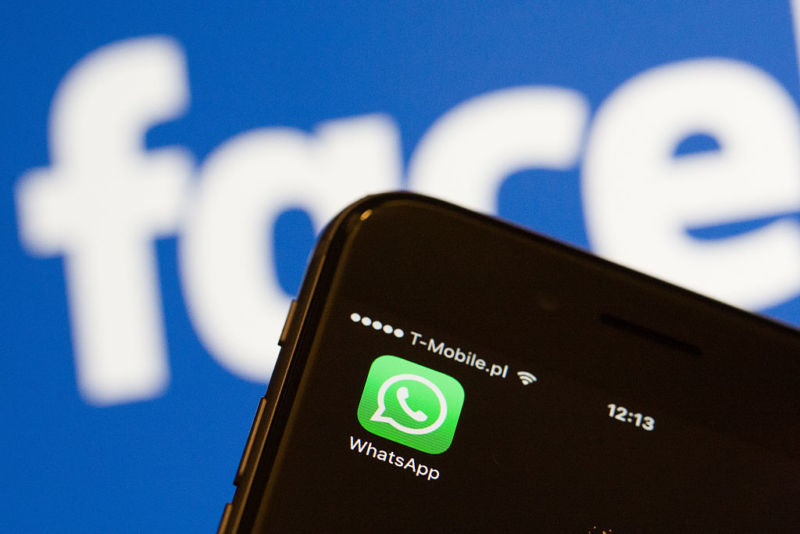
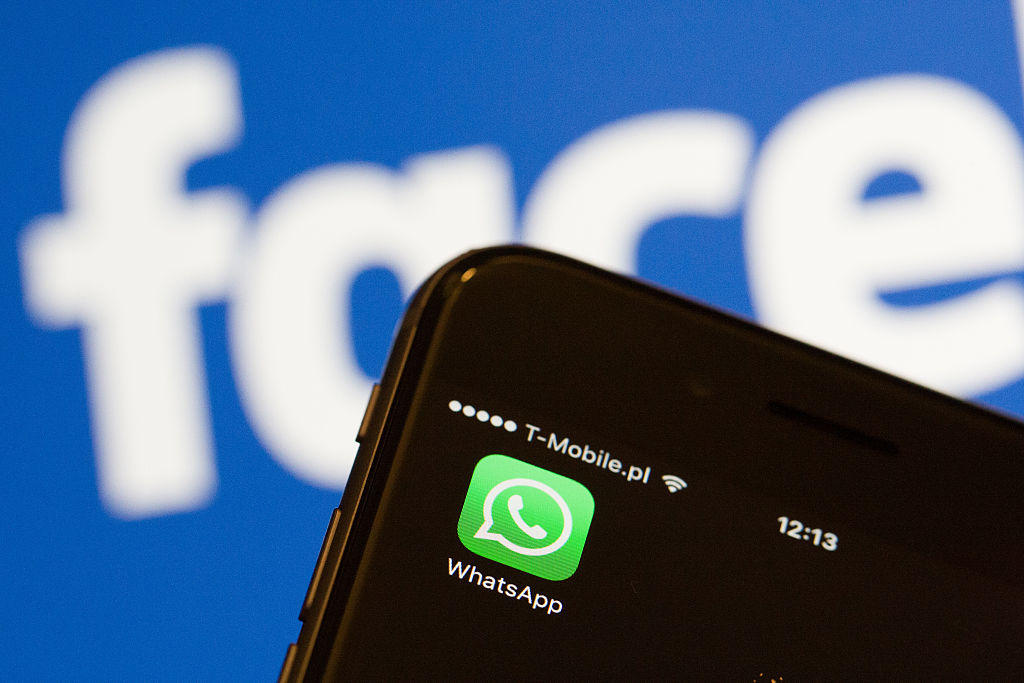
The European Commission is investigating potentially false claims that Facebook cannot merge user information from the messaging network WhatsApp, which it acquired in 2014. Warsaw, Poland, on December 21, 2016. (Photo by Jaap Arriens/NurPhoto via Getty Images)
Enlarge / The European Commission is investigating potentially false claims that Facebook cannot merge user information from the messaging network WhatsApp, which it acquired in 2014. Warsaw, Poland, on December 21, 2016. (Photo by Jaap Arriens/NurPhoto via Getty Images)
NurPhoto | Getty Images

The House Antitrust Subcommittee will conduct a series of hearings on the growing power of big technology companies, Chairman David Cicilline (D-R.I.) announced on Monday. It's the latest sign of growing interest in antitrust action against the largest technology companies—especially Google, Facebook, Amazon, and Apple.

"After four decades of weak antitrust enforcement and judicial hostility to antitrust cases, it is critical that Congress step in to determine whether existing laws are adequate to tackle abusive conduct by platform gatekeepers or whether we need new legislation to respond to this challenge," Cicilline said in a press release.

The announcement came shortly after news about a deal between the Department of Justice and the Federal Trade Commission, which share responsibility for antitrust enforcement. Under the deal, the Justice Department will focus on investigating Google and Apple, while the FTC will be responsible for Facebook and Amazon. The Justice Department has reportedly begun an investigation of Google; it's not known if the agencies have begun investigating the other firms.

Facebook, Google, and Amazon stock all saw big declines on Monday.

These companies have become so large that it's difficult to predict which concerns will ultimately attract the attention of officials in Congress and the executive branch. Facebook runs the world's largest social network and owns Instagram and WhatsApp. Google dominates the search business and also owns YouTube and Android. Amazon leads in the cloud computing and e-book markets and owns retailers from Whole Foods to Zappos. If a company uses its dominance in one market to prop up its product in another market, that could run afoul of antitrust laws.

Let's block ads! (Why?)


https://arstechnica.com/tech-policy/2019/06/congressional-hearings-signal-growing-antitrust-problems-for-big-tech/

2019-06-04 17:19:00Z
52780307956168

Fed's Powell, in dovish pivot, is prepared to respond if trade war escalates - Fox Business

Federal Reserve Chairman Jerome Powell said on Tuesday the U.S. central bank is watching how global trade developments are impacting the U.S. economic outlook and is prepared to act as necessary to sustain the near-record expansion.

Continue Reading Below

“We do not know how or when these issues will be resolved. We are closely monitoring the implications of these developments for the U.S. economic outlook and, as always, we will act as appropriate to sustain the expansion, with a strong labor market and inflation near our symmetric 2 percent objective,” he said in a speech.

MORE FROM FOXBUSINESS.COM...

Powell’s comments ahead of the “Conference on Monetary Strategy, Tools and Communications Practices” come in the midst of increased calls for interest rate cuts by the Fed.

The CME’s FedWatch Tool, which analyzes the probability of rate moves for upcoming Fed meetings, is currently predicting a 55.9 percent chance of a rate cut in July, with 49.7 percent of traders anticipating the benchmark federal funds rate will be moved into the 2 percent to 2.25 percent range. Only 13.6 percent of traders think interest rates will remain at the current range of 2.25 percent to 2.5 percent by September.

In his speech, Powell stressed that policymakers would respond if inflation remains persistently low, although he did not specify what actions the Fed would take. Core inflation currently remains below the Fed's 2 percent target, although it ticked up slightly in April.

“In this setting, a similar low-side surprise, if it were to persist, would bring us uncomfortably closer to the ELB,” he said, referring to the effective lower bound for interest rates. “My FOMC colleagues and I must — and do — take seriously the risk that inflation shortfalls that persist even in a robust economy could precipitate a difficult-to-arrest downward drift in inflation expectations.”

Despite the more-dovish pivot, however, Powell avoided any other specific issues relating to the current economic condition.

The Fed has not cut interest rates since 2008 when it lowered the interbank lending rate to 0.25 percent -- essentially zero -- in the aftermath of the financial crisis. Interest rates remained at that level until 2015, when the central bank began tightening once again. The Fed has hiked rates nine times since 2015, including four times last year.

During the last Federal Open Market Committee meeting, Powell told reporters that policymakers did not see a strong case for moving in either direction.

CLICK HERE TO GET THE FOX BUSINESS APP

"We do think our policy stance is appropriate right now," he said at the time.

Let's block ads! (Why?)


https://www.foxbusiness.com/economy/powell-in-dovish-pivot-says-fed-is-prepared-to-respond-if-trade-war-escalates

2019-06-04 15:43:49Z
52780307955932

Walmart will recruit high school students with free SAT prep and $1 a day college tuition - CNN

Walmart announced Tuesday that it will expand its $1 a day college benefit to its current high school students and future high schoolers who work at the company.
It will also offer up to seven hours of free college credit to high school students and provide free SAT and ACT prep through a partner network. Then Walmart will subsidize the cost of students' tuition, books and fees at six non-profit colleges, including the University of Florida.
Students who go through the program while they work at Walmart will be eligible for different types of bachelor's and associate degrees, such as computer technology, business management and supply chain management.
Bernie Sanders and a vote on sexual harassment: What to expect from Walmart's annual meeting
Unemployment in the United States has fallen to its lowest level in decades, posing a challenge for Walmart and other top retailers. As the retail job openings rate stays above the national average, Walmart has raised its minimum wage, expanded benefits and started to pay bonuses to workers who limit their absences.
Still, Walmart is looking for new ways it can attract new talent.
The retailer is the largest private employer in America. It has more than 1.5 million workers in this country, but less than 25,000 of them are in high school today. That's below the retail industry average, entry-level according to Walmart.
In the past, retail jobs had been attractive to high school students. But Walmart says it has become increasingly difficult to recruit high schoolers because of scheduling difficulties.
Walmart isn't the only company having trouble finding high school students. The youth employment rate has been declining for years as fewer teens enter into the workforce. Several factors are driving this trend, such as an increased focus on youth activities that are more likely to get them into a good college, like summer internships or volunteer programs.
But Walmart believes its offer of free SAT prep, credit for college courses and $1 a day tuition will draw teenagers. It will also try to attract high school students with flexible scheduling and the option of working steady shifts.
Reaching high school students is important to Walmart so the company can identify and train its next crop of talent. Walmart hopes that students who use the education benefit will stick with Walmart after they complete their degrees and move up the ranks at the company either at stores, within the company's supply chain or in corporate roles.
Walmart has a history of building up high school students. More than 300 of Walmart's approximately 4,700 US store managers started off as hourly workers in high school. Walmart's current CEO, Doug McMillon, started working at Walmart in high school, too.
"We see this as a pipeline that we can leverage that we currently aren't," said Julie Murphy, Walmart's executive vice president of people. "We want to be able to create that connection early."
Walmart is doubling down on robot janitors. Here's why
Walmart made the decision to expand the college benefit to high schoolers with "the future needs for our organization" in mind, she added.
Walmart (WMT) first announced the college benefit last year. The retailer says that more than 7,500 workers have been accepted into the program, spanning young adults to workers older than 60. They also range in experience. Some workers, for example, have been at the company for decades. Walmart projects that more than 60,000 students will go through the program in the next four years.
For Walmart, the college program has helped it retain workers and recruit new employees.
"The business aspect of this is clear," said Drew Holler, vice president of associate experience for Walmart US.
Other companies are also focusing on education benefits to draw workers. Hotel chains and McDonald's have recently expanded tuition benefit programs. In 2018, McDonald's started offering $2,500 a year to eligible restaurant employees and $3,000 to managers in tuition assistance. Starbucks also started a tuition-free program in 2015.
-- CNN Business' Katie Lobosco and Lydia DePillis contributed to this article.

Let's block ads! (Why?)


https://www.cnn.com/2019/06/04/business/walmart-college-tuition-benefit-high-school-students/index.html

2019-06-04 15:33:38Z
52780308816631

CVS to open 1,500 HealthHUB stores over next two years - CNBC

CVS will open 1,500 HealthHUB stores by the end of 2021, the company announced Tuesday ahead of its investor day.

The HealthHUBs are remodeled drugstores that focus more on health services and products and less on candy and greeting cards. CVS opened its first three HealthHUB locations in Houston in February. It plans to open more in Houston, Atlanta, Philadelphia, southern New Jersey and Tampa, Florida, by the end of the year.

"We're pleased with the customer feedback we've received on the HealthHUBs," CVS Pharmacy Kevin Hourican said in an interview. He said these stores have seen higher traffic in the MinuteClinics, increased sales in the front of the store and more prescription volumes.

HealthHUBs include an expanded health clinic, with a lab for blood testing and health screenings. There are also wellness rooms for yoga and seminars, dietitians and respiratory specialists in the HealthHUBs.

Alan Lotvin, CVS executive vice president of transformation, said the 50 stores CVS will add this year will include these same features, while the ones added next year and the year after may look slightly different as the company improves on the design. CVS may tweak the designs for different markets and store sizes. For example, Hourican said stores in the Northeast tend to be smaller than the ones in Texas, so the company will need to pare it down.

Like other retailers, CVS needs to figure out how to keep people coming into its stores, and health services gives consumers something they can't buy online.

The company in May said it decided to close 46 underperforming stores. Hourican said he does not anticipate "meaningful" store closures. However, he said 500 store leases come up for renewal every year and CVS will review those.

Executives also think the HealthHUBs will help advance CVS' vision for its $70 billion acquisition of health insurer Aetna. The combined company says it wants to keep its members healthier and lower its health-care expenses and that managing chronic conditions in its drugstores will help accomplish that.

Measuring progress on this front may take longer, Hourican said. The company will track how its members are engaging with the services in stores and whether that leads to behavior change, clinical outcomes and cost reductions.

"It really is measuring at each step along the way, are you getting what you expect to get," he said. "When you get the clinical outcomes you see the cost savings we modeled."

CVS' announcement comes as executives try to impress analysts and shareholders on their strategic vision at the company's investor day in New York on Tuesday. The company's stock price has slid 20% this year. Executives warned that 2019 would be challenging, between integrating Aetna, navigating regulatory pressure and shrinking profitability for filling prescription drugs.

Let's block ads! (Why?)


https://www.cnbc.com/2019/06/04/cvs-to-add-healthhub-stores-drugstore-announces-ahead-of-investor-day.html

2019-06-04 10:49:38Z
CAIiEPxM6I0e-V7ibJPdx8BEbMIqGQgEKhAIACoHCAow2Nb3CjDivdcCMJ-thQY

Feds crank up antitrust heat on Big Tech - Axios

Broad U.S. antitrust action against Big Tech moved firmly from the speculative realm to the investigative mode in the last 72 hours, as both Congress and regulatory agencies appeared to be moving forward with inquiries.

The big picture: While the pressure on the likes of Google, Facebook, Amazon and Apple has been mounting for years, the one-two punch of a public Congressional investigation into their dominance and possible antitrust probes by regulators marks a major escalation in tensions.

  • Last year saw high-profile testimony by CEOs like Facebook's Mark Zuckerberg, but the action will now shift to more mundane yet substantial document and evidence gathering that would form the basis of court cases or settlements.

Driving the news: The House Judiciary Committee said Monday that it was launching a bipartisan investigation into whether big tech platforms are engaged in monopolistic practices.

  • A person familiar with the investigation said that, in addition to public hearings, the inquiry would include requesting documents from a wide range of companies.
  • That could allow the committee to receive information from small competitors of the tech giants who would otherwise be wary of testifying publicly, the person said.
  • "Given the growing tide of concentration and consolidation across our economy, it is vital that we investigate the current state of competition in digital markets and the health of the antitrust laws," said Rep. Jerrold Nadler (D-NY), the committee's chairman.
  • Tech stocks fell in Monday trading as the federal interest in the companies came into focus.

Between the lines: The investigation could help lawmakers develop a factual record to shape legislation overhauling the nation's antitrust laws, which reformers say are inadequate for reining in corporate power as it exists today.

The announcement followed reporting over the weekend and into Monday that the Justice Department and the Federal Trade Commission had split up the field of investigations into anti-competitive behavior by tech giants.

Why it matters: Of the many ways critics want to address concerns about Big Tech, antitrust action has always been among the most significant — although it was largely seen as the least likely route.

  • It could result in action as serious as the firms being broken up, but even if it doesn't, it could seriously distract the platforms' efforts to grow their main businesses and anticipate new waves of tech innovation. Microsoft learned this lesson the hard way after its antitrust fight with Washington two decades ago.

What we're watching: Congressional hearings on the issue will unfold in the coming months, and signs that DOJ and FTC are moving forward with formal investigations into the tech giants could leak out in the form of official inquiries sent to the companies or their competitors.

Our thought bubble: Once inquiries like this get started, they develop their own momentum even as they proceed at what feels like a leaden pace to tech insiders. These companies likely face years of entanglement.

Let's block ads! (Why?)


https://www.axios.com/google-facebook-amazon-apple-antitrust-investigations-91349658-684c-47c2-9ce3-ca9307d7cc59.html

2019-06-04 10:00:08Z
52780307956168