Sabtu, 18 Mei 2019

Europe should help US turn the heat on Iran - Gulf News

Europe should help US turn the heat on Iran
Image Credit: Muhammed Nahas/©Gulf News

As summer approaches in the Arabian Gulf, geopolitical tensions are rising as fast as the temperature. Saudi Arabia says it has suffered drone attacks on land-based oil pumping stations, and that two of its oil tankers were sabotaged. Two other tankers, including one flagged to Nato ally Norway, were also reportedly damaged by small explosive devices. The seaborne incidents all occurred off the coast of the UAE at a maritime oil-bunkering station. Each attack ripped a five-to-ten-foot hole in the hull of the tanker near or at the waterline, suggesting the saboteurs attached mines to the ships’ sides.

In response, the United States military is exploring options to deter Iran, which is thought to be behind the tanker attacks. This has included increasing the level of operational readiness of US troops throughout the region; deploying long-range B-52 Bombers and F-15 fighters to the US base in the Gulf; sending a carrier strike group, led by the nuclear-powered Abraham Lincoln, into the waters of the Arabian Gulf; exploring options to deploy up to 120,000 new troops to the region; and issuing strong statements from the White House, promising significant military retaliation if Iran provokes an incident. All of this comes as the US further pressures the Iranian economy through harsh sanctions, which are having a significant effect.

Related articles

Given the upcoming election in the US, it seems highly unlikely that President Donald Trump will want things to escalate to a full-on military confrontation. He successfully ran on the idea of pulling the US out of the region, so the odds of him approving significant military action, especially a land invasion, seem low.

The worry on which the world should focus is not a deliberate and overt Iranian attack, but a miscalculation that spirals into war. That possibility certainly has the full attention of the new US Ambassador to Saudi Arabia, retired General John Abizaid, who was previously commander of US Central Command, which includes the Middle East. Few people know better the way both cost and escalation are difficult to control in the region, and he is calling for a gathering of facts, not a military attack. “We need to do a thorough investigation to understand what happened, why it happened, and then come up with reasonable responses short of war,’ he said in Riyadh on Tuesday. “It’s not in [Iran’s] interest, it’s not in our interest, and it’s not in Saudi Arabia’s interest to have a conflict,” he added.

How could things escalate? Quite easily, unfortunately. I commanded the Carrier Strike Group Enterprise in the Gulf in the summer of 2003. Every day I watched Navy warships under my command operate with restraint as small Iranian Navy and Revolutionary Guard boats circled us, made high-speed runs in our direction, and broadcast dire warnings through propaganda. In 2016, two small US riverine patrol boats and their crews were seized by Iran. While the sailors were released shortly after, that kind of incident in today’s hair-trigger environment could easily cause the administration to launch strikes against Iranian ships. Iran could retaliate with mines against commercial shipping, threatening to close the Strait of Hormuz, through which flows 30 per cent of the world’s oil.

Pre-strike operations

This would very likely lead to the US and its allies to forcibly reopen the strait, an operation that would almost certainly require cruise missile and air strikes against the entire Iranian naval force, which would necessitate pre-strike operations against the Iranian air force. Inexorably, the forces of escalation would push both sides to employ ever-higher levels of military action.

The best approach for the US now is to return to a greater focus on allies, partners and friends. This means continuing to build an anti-Iran coalition that includes not only Saudi Arabia and the other Gulf States, but also the European and Nato partners. The role for the Europeans is to help force Iran back to the negotiating table through economic sanctions. It’s unfortunate that some of them don’t seem to be taking the increased Iranian threat seriously, even the usually reliable Brits.

The US must continue to step up its intelligence efforts in the region, especially in offensive cyber operations. Iran is a very capable cyber-opponent, and will certainly use that ability against the Saudis regionally and the US more broadly. Additional missile-defence capabilities should be deployed to the region as well.

A century ago, Europe managed to sleepwalk into a four-year war set off by an assassination in the Balkans, which led to the automatic execution of war plans and mobilisation of forces on both sides. The world can avoid stumbling into another war in the Middle East. But, as Abizaid put it, it will require using other tools “short of war”.

— Bloomberg

James Stavridis is a Bloomberg Opinion columnist. He is a retired US Navy admiral and former supreme allied commander 
of Nato.

Let's block ads! (Why?)


https://gulfnews.com/opinion/op-eds/europe-should-help-us-turn-the-heat-on-iran-1.64025786

2019-05-18 12:40:12Z
52780298905089

One US Bike-Maker Weighs Costs And Benefit Of Tariffs On Chinese Goods - NPR

Zakary Pashak started Detroit Bikes when he moved to Detroit in 2011, at a time when the city was reeling. Courtesy of Melany Hallgren hide caption

toggle caption
Courtesy of Melany Hallgren

Zakary Pashak is a rare breed. His company, Detroit Bikes, is one of the very few American bicycle makers. Most bikes come from China.

At times, Pashak endured ridicule at trade shows. "I'd get kind of surly bike mechanics coming up and telling me that my products stunk. There's definitely a fair bit of attitude in my industry," he says.

But last September, the industry's tune abruptly changed. The first round of U.S. tariffs, or import taxes, upped the cost of Chinese-made bikes by 10%, and companies saw Detroit Bikes as a potential partner.

"All of a sudden I felt like the belle of the ball or something," Pashak says.

Now a new round of tariffs set at 25% is hitting imports from China. Like many other American companies, Detroit Bikes is poring over the 194-page list of imported Chinese goods subject to the levies. Companies like Detroit Bikes rely on those goods, and now they face choices that will ultimately determine the prices consumers will pay.

Pashak started the company when he moved to Detroit in 2011, at a time when the city was reeling.

"What drew me to Detroit was the history, the music, the manufacturing," he says. "But it was also the state that the city was in at the time."

The financial crisis slammed automakers, laid off thousands of workers, many of whom abandoned their homes. Pashak envisioned an urban revival. Using those idle factories and workers, he wanted to build an American-made bicycle, which is how Detroit Bikes was born.

This month, the Trump administration upped the taxes it charges on Chinese imports by an additional 15%. Now, several companies seeking to avoid those added costs are considering hiring Detroit Bikes to manufacture bikes for their brands.

"If these tariffs are still in place next year at this time, I would anticipate that would probably be quite good for my business," he says.

But the tariffs aren't all good for Detroit Bikes. In fact, Pashak says the effects are so convoluted, he's not sure yet whether they will ultimately help or hurt.

For one thing, his company relies on imported parts — rims, spokes, tires, cranks — most of which come from China. Tariffs on those also increased 25% since last fall, driving up Detroit Bikes' expenses. To counteract that, Pashak is painstakingly evaluating each part, to see whether cheaper alternatives are available elsewhere.

He's looking at parts made in Taiwan, which aren't subject to tariffs. Or Cambodia, which he says is "the new hot country ... that everyone's trying to rush into."

Businesses like Detroit Bikes react to tariffs in many ways, and one of the most significant is in finding alternate sources of goods. If Pashak succeeds in finding cheaper substitute parts, he keeps costs down on his bikes, which range from about $400 to $1,250. That then blunts the overall price increase for his customers.

Economists call this "substitution," and say it affects how much consumers pay for tariffs.

"The impacts of these wars depend heavily on the substitution effect," says Amit Khandelwal, a professor of international business at Columbia University.

Some substitutes are relatively easy to find. When China slapped retaliatory tariffs on American soybeans and corn, for example, buyers quickly turned to suppliers in South America.

But finding replacements for things like bike chains or software chips is considerably harder; factories can't just be ginned up on demand. "Generally, the more specialized products often take longer to substitute," Khandelwal says.

And timing is a key factor. It's unclear whether the tariffs will remain for a week, a month, or years. Businesses, from farmers to retailers, are reluctant to make big changes when they can't plan for the long haul.

That limits options for companies like Brooklyn Bicycle Co., which is based in its namesake city. It sources all its parts from 40 Asian countries, which are then assembled in China, before being shipped to the U.S. Ryan Zagata, the company's president, says it would take about a year to rethink his supply chain and find options outside of China. And "it would be incredibly costly," he says.

Detroit Bikes' Pashak says he's already mapped out some ingenious — if complicated — workarounds, if the tariffs stay put.

"I can bring in Chinese parts to Canada at no tariff code, bring in a Cambodian frame to Canada. Or ship my American frames up to Canada, put the parts on them, and then import them into the country," he says. Doing so would relieve his tariff burden, but would take months. In the meantime, he says, tariffs might go away next week.

So the easiest solution for many companies, in the short run, is to raise prices. Many of Detroit Bikes' rivals that rely on imported Chinese bikes, say they'll have no choice. But Pashak says he's not sure if his company will follow suit.

"It might be better for me strategically just to let all my competitors raise their prices because they have to," he says. In the meantime, he'll continue exploring options to try to make the tariffs work to his advantage.

Let's block ads! (Why?)


https://www.npr.org/2019/05/18/724286756/for-one-u-s-bike-maker-tariffs-are-a-mixed-bag

2019-05-18 12:13:00Z
CAIiEEAw1LnJUFq_KOwpP5QFbPkqFggEKg4IACoGCAow9vBNMK3UCDCvpUk

US may scale back Huawei trade restrictions to help existing customers - CNBC

The U.S. Commerce Department said on Friday it may soon scale back restrictions on Huawei Technologies after this week's blacklisting would have made it nearly impossible for the Chinese company to service its existing customers.

The Commerce Department, which had effectively halted Huawei's ability to buy American-made parts and components, is considering issuing a temporary general license to "prevent the interruption of existing network operations and equipment," a spokeswoman said.

Potential beneficiaries of the license could, for example, include internet access and mobile phone service providers in thinly populated places such as Wyoming and eastern Oregon that purchased network equipment from Huawei in recent years.

In effect, the Commerce Department would allow Huawei to purchase U.S. goods so it can help existing customers maintain the reliability of networks and equipment, but the Chinese firm still would not be allowed to buy American parts and components to manufacture new products.

The potential rule roll back suggests changes to Huawei's supply chain may have immediate, far-reaching and unintended consequences.

The blacklisting, officially known as placing Huawei on the Commerce Department's entity list, was one or two efforts by the Trump administration this week allegedly made in an attempt to thwart national security risks. In an executive order, President Donald Trump also effectively barred the use of its equipment in U.S. telecom networks.

The United States believes Huawei's smartphones and network equipment could be used by China to spy on Americans, allegations the company has repeatedly denied.

The latest Commerce move comes as China has struck a more aggressive tone in its trade war with the United States, suggesting a resumption of talks between the world's two largest economies would be meaningless unless Washington changed course.

A spokesman for Huawei, the world's largest telecommunications equipment maker, did not immediately respond to a request for comment.

Out of $70 billion Huawei spent for buying components in 2018, some $11 billion went to U.S. firms including Qualcomm, Intel Corp and Micron Technology.

The logo of Huawei Technologies is pictured in front of the German headquarters of the Chinese telecommunications giant in Duesseldorf, Germany, February 18, 2019.

Wolfgang Rattay | Reuters

If the Commerce Department issues the license, U.S. suppliers would still need separate licenses to conduct new business with Huawei, which would be extremely difficult to obtain, the spokeswoman said.

The temporary general license would last for 90 days, she said, and would be posted in the Federal Register, just as the rule adding Huawei to the entity list will be published in the government publication on Tuesday.

"The goal is to prevent collateral harm on non-Huawei entities that use their equipment," said Washington lawyer Kevin Wolf, a former Commerce Department official.

The entity listing bans Huawei and 68 affiliates in 26 countries from buying American-made goods and technology without licenses that would likely be denied.

The entities list identifies companies believed to be involved in activities contrary to the national security or foreign policy interests of the United States.

In a final rule posted on Thursday, the government tied Huawei's entity listing to a criminal case pending against the company in Brooklyn, New York.

U.S. prosecutors unsealed the indictment in January accusing the company of engaging in bank fraud to obtain embargoed U.S. goods and services in Iran and to move money out of the country via the international banking system.

Huawei Chief Financial Officer Meng Wanzhou, daughter of the company's founder, was arrested in Canada in December in connection with the indictment, a move that has led to a three-way diplomatic crisis involving the U.S., China and Canada.

Meng, who was released on bail, remains in Vancouver, and is fighting extradition. She has maintained her innocence, and Huawei has entered a plea of not guilty in New York.

Trump injected other considerations into the criminal case after Meng's arrest when he told Reuters he would intervene if it helped close a trade deal.

Watch: Rare look inside Chinese smartphone giant, Huawei's HQ

— Reuters correction: This article has been corrected to reflect that Meng Wanzhou is Huawei's Chief Financial Officer.

Let's block ads! (Why?)


https://www.cnbc.com/2019/05/18/us-may-scale-back-huawei-trade-restrictions-to-help-existing-customers.html

2019-05-18 05:04:37Z
CAIiEI5LkfEYunWXN04Q3mYLJZgqGQgEKhAIACoHCAow2Nb3CjDivdcCMP3ungY

US may scale back Huawei trade restrictions to help existing customers - CNBC

The U.S. Commerce Department said on Friday it may soon scale back restrictions on Huawei Technologies after this week's blacklisting would have made it nearly impossible for the Chinese company to service its existing customers.

The Commerce Department, which had effectively halted Huawei's ability to buy American-made parts and components, is considering issuing a temporary general license to "prevent the interruption of existing network operations and equipment," a spokeswoman said.

Potential beneficiaries of the license could, for example, include internet access and mobile phone service providers in thinly populated places such as Wyoming and eastern Oregon that purchased network equipment from Huawei in recent years.

In effect, the Commerce Department would allow Huawei to purchase U.S. goods so it can help existing customers maintain the reliability of networks and equipment, but the Chinese firm still would not be allowed to buy American parts and components to manufacture new products.

The potential rule roll back suggests changes to Huawei's supply chain may have immediate, far-reaching and unintended consequences.

The blacklisting, officially known as placing Huawei on the Commerce Department's entity list, was one or two efforts by the Trump administration this week allegedly made in an attempt to thwart national security risks. In an executive order, President Donald Trump also effectively barred the use of its equipment in U.S. telecom networks.

The United States believes Huawei's smartphones and network equipment could be used by China to spy on Americans, allegations the company has repeatedly denied.

The latest Commerce move comes as China has struck a more aggressive tone in its trade war with the United States, suggesting a resumption of talks between the world's two largest economies would be meaningless unless Washington changed course.

A spokesman for Huawei, the world's largest telecommunications equipment maker, did not immediately respond to a request for comment.

Out of $70 billion Huawei spent for buying components in 2018, some $11 billion went to U.S. firms including Qualcomm, Intel Corp and Micron Technology.

The logo of Huawei Technologies is pictured in front of the German headquarters of the Chinese telecommunications giant in Duesseldorf, Germany, February 18, 2019.

Wolfgang Rattay | Reuters

If the Commerce Department issues the license, U.S. suppliers would still need separate licenses to conduct new business with Huawei, which would be extremely difficult to obtain, the spokeswoman said.

The temporary general license would last for 90 days, she said, and would be posted in the Federal Register, just as the rule adding Huawei to the entity list will be published in the government publication on Tuesday.

"The goal is to prevent collateral harm on non-Huawei entities that use their equipment," said Washington lawyer Kevin Wolf, a former Commerce Department official.

The entity listing bans Huawei and 68 affiliates in 26 countries from buying American-made goods and technology without licenses that would likely be denied.

The entities list identifies companies believed to be involved in activities contrary to the national security or foreign policy interests of the United States.

In a final rule posted on Thursday, the government tied Huawei's entity listing to a criminal case pending against the company in Brooklyn, New York.

U.S. prosecutors unsealed the indictment in January accusing the company of engaging in bank fraud to obtain embargoed U.S. goods and services in Iran and to move money out of the country via the international banking system.

Huawei Chief Financial Officer Meng Wanzhou, daughter of the company's founder, was arrested in Canada in December in connection with the indictment, a move that has led to a three-way diplomatic crisis involving the U.S., China and Canada.

Meng, who was released on bail, remains in Vancouver, and is fighting extradition. She has maintained her innocence, and Huawei has entered a plea of not guilty in New York.

Trump injected other considerations into the criminal case after Meng's arrest when he told Reuters he would intervene if it helped close a trade deal.

Watch: Rare look inside Chinese smartphone giant, Huawei's HQ

— Reuters correction: This article has been corrected to reflect that Meng Wanzhou is Huawei's Chief Financial Officer.

Let's block ads! (Why?)


https://www.cnbc.com/2019/05/18/us-may-scale-back-huawei-trade-restrictions-to-help-existing-customers.html

2019-05-18 04:44:43Z
CAIiEI5LkfEYunWXN04Q3mYLJZgqGQgEKhAIACoHCAow2Nb3CjDivdcCMP3ungY

Jumat, 17 Mei 2019

Walmart unveils design plans for campus of new headquarters in Northwest Arkansas - Arkansas Online

BENTONVILLE — Walmart Inc.’s new headquarters will be energy efficient, tech-enabled and connected to the community, company executives said Friday as they revealed design plans for the campus.

The long-anticipated release of plans for the massive construction project were detailed at a news conference featuring Gov. Asa Hutchinson and Walmart Chief Executive Doug McMillon.

The new home office will be situated on 300 acres in Bentonville on the east side of J Street, between Central Avenue and Arkansas 102.

Demolition at the construction site will begin in July, along with infrastructure and utility construction, said Dan Bartlett, Walmart’s executive vice president of corporate affairs. He declined to estimate the cost of the project, which is expected to take several years to complete.

Read Saturday's Arkansas Democrat-Gazette for full details.

Gallery: Design plans for new Walmart headquarters

Let's block ads! (Why?)


https://www.arkansasonline.com/news/2019/may/17/walmart-unveils-design-plans-campus-new-arkansas-h/

2019-05-17 17:27:00Z
52780298793675

Bitstamp Starts Investigation After Large BTC Sell Leads to $250 Mln Liquidated on BitMEX - Cointelegraph

Major crypto exchange Bitstamp has launched an investigation after a large bitcoin (BTC) sell order heavily impacted its order book, as the firm announced in a tweet on May 17.

Bitstamp reported an execution of a large sell order in BTC to United States dollars (USD) on its platform today, as the exchange wrote earlier today.

While the company has not specified the details of the transaction, the price of bitcoin had plummeted about 20% from around $7,800 to as low as $6,250 in less than 30 minutes earlier on the day, according to data from trading analytics platform TradingView. Briefly after the crash, bitcoin’s price has surged back, but stabilized below $7,400.

Bitstamp reported that their platform was operating properly as designed.

BTC/USD chart on Bitstamp on May 17

BTC/USD chart on Bitstamp on May 17. Source: TradingView

According to crypto news outlet The Block, the sell order on Bitstamp led to a liquidation of $250 million long positions on the BitMEX exchange, which further resulted in price declines on other crypto exchanges.

As reported by crypto publication Forklog, the sell order on Bitstamp included 5,000 bitcoins sold at $6,200. Some people in crypto community suggested that the sell order could be made by mistake, with the order’s owner having been meant to sell his bitcoin at $8,200 instead of $6,200.

Bitcoin is down around 10% over the past 24 hours to trade at $7,166 at press time after trading at around $7,800 yesterday, while 19 out of the top 20 cryptos by market cap are seeing major losses, according to data from CoinMarketCap.

Let's block ads! (Why?)


https://cointelegraph.com/news/bitstamp-starts-investigation-after-large-btc-sell-leads-to-250-mln-liquidated-on-bitmex

2019-05-17 15:33:00Z
52780298354600

To Improve Health, Cut Costs, Walmart Pushes For Better Medical Imaging For Workers - NPR

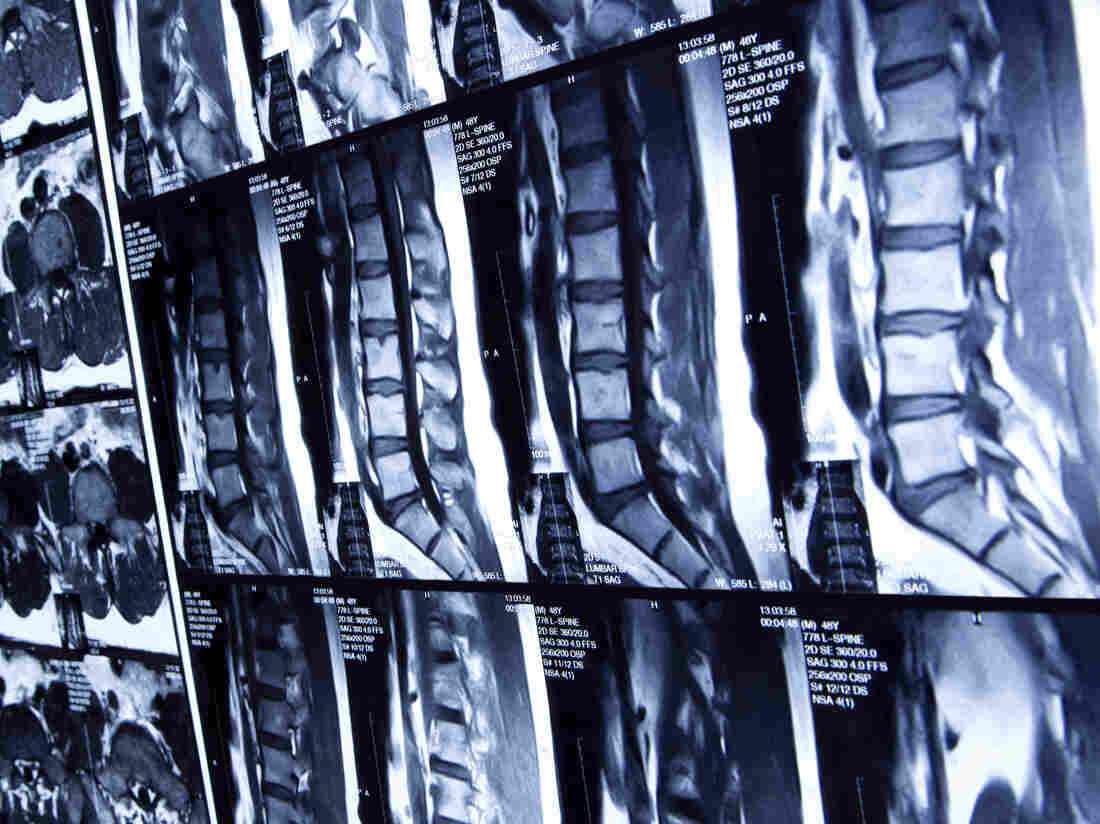
Errors in reading diagnostic images like MRIs or CT scans can lead to unnecessary and costly medical procedures. Walmart is pushing its employees to use a vetted list of high quality imaging centers to avoid errors. HadelProductions/Getty Images hide caption

toggle caption
HadelProductions/Getty Images

Walmart Inc., the nation's largest private employer, is worried that too many of its workers are having health conditions misdiagnosed, leading to unnecessary surgery and wasted health spending.

The issue crystallized for Walmart officials when they discovered about half of the company's workers who went to the Mayo Clinic and other specialized hospitals for back surgery in the past few years turned out not to need those operations. They were either misdiagnosed by their doctor or needed only non-surgical treatment.

A key issue: Their diagnostic imaging, such as CT scans and MRIs, had high error rates, says Lisa Woods, senior director of benefits design for Walmart.

So the company, whose health plans cover 1.1 million U.S. employees and dependents, has recommended since March that workers use one of 800 imaging centers identified as providing high-quality care. That list was developed for Walmart by Covera Health, a New York City based health analytics company that uses data to help spot facilities likely to provide accurate imaging for a wide variety of conditions, from cancer to torn knee ligaments.

Although Walmart and other large employers in recent years have been steering workers to medical centers with proven track records for specific procedures such as transplants, the retail giant is believed to be the first to prod workers to use specific imaging providers based on diagnostic accuracy — not price, say employer health experts.

"A quality MRI or CT scan can improve the accuracy of diagnoses early in the care journey, helping create the correct treatment plan with the best opportunity for recovery," says Woods. "The goal is to give associates the best chance to get better, and that starts with the right diagnosis."

Walmart employees are not required to use those 800 centers, but if they don't use one that is available near them, they will have to pay additional cost sharing. Company officials advise workers that they could have more accurate results if they opt for the specified centers.

Studies show a 3% to 5% error rate each workday in a typical radiology practice, but some academic research has found mistakes on advanced images such as CT scans and MRIs can reach up to 30% of diagnoses. Although not every mistake affects patient care, with millions of CT scans and MRIs done each year in the United States, such mistakes can have a significant impact.

"There's no question that there are a lot of errors that occur," says Dr. Vijay Rao, chairwoman of radiology at the Thomas Jefferson University Hospital in Philadelphia.

Errors at imaging centers can happen for many reasons, Rao says, including the radiologist not devoting enough time to reading each image, the technician not positioning the patient correctly in the imaging machine or a radiologist not having sufficient expertise.

Employers and insurers typically do little to help patients identify which radiology practices provide the most accurate results. Instead, employers have been focused on the cost of imaging tests. Some employers or insurers require plan members to use free-standing outpatient centers rather than those based in hospitals, which tend to be more expensive.

Woods says Walmart found that deficiencies and variation in imaging services affected employees nationwide. "Unfortunately, it is all over the country. It's everywhere," she says.

Walmart's new imaging strategy is aligned with its efforts over the past decade to direct employees to select hospitals for high-cost health procedures. Since 2013, Walmart has been sending workers and their dependents to select hospitals across the country where it believes they can get better results for spine surgery, heart surgery, joint replacement, weight loss surgery, transplants and certain cancers.

As part of its "Centers of Excellence" program, the Bentonville, Ark.-based retail giant picks up the tab for the surgeries and all related travel expenses for patients on the company's health insurance plan, including a caregiver.

Tracking imaging centers' quality

Most consumers give little thought to where to get an MRI or CT scan, and usually go where their doctors send them, the closest facility or, increasingly, the one that offers the lowest price, notes Covera CEO Ron Vianu. "Most people think of diagnostic imaging as a commodity, and that's a mistake," he says.

Vianu says studies have shown that radiologists frequently offer different diagnoses based on the same image taken during an MRI or CT scan. Among explanations are that some radiologists are better at analyzing certain types of images — like those of the brain or bones — and sometimes radiologists read images from exams they have less experience with, he says.

Covera has collected information on thousands of hospital-based and outpatient imaging facilities.

"Our primary interest is understanding which radiologist or radiology practices are achieving the highest level of diagnostic accuracy for their patients," says Dan Elgort, Covera's chief data science officer.

Covera has independent radiologists evaluate a sampling of patient care data on imaging centers to determine facilities' error rates. It uses statistical modeling along with information on each center's equipment, physicians and use of industry-accepted patient protocols to determine the facilities' rates of accuracy.

Covera expects to have about 1,500 imaging centers in the program it runs for Walmart by year's end, says CEO Ron Vianu.

There are about 4,000 outpatient imaging centers in the United States, not counting thousands of hospital-based facilities, he estimated.

As a condition for participating in the program, each of the imaging centers has agreed to routinely send a sampling of their patients' images and reports to Covera.

Rao applauded the effort by Walmart and Covera to identify imaging facilities likely to provide the most accurate reports. "I am sure centers that are worried about their quality will not be happy, but most quality operations would welcome something like this," she says.

Few guides for consumers

Consumers have little way to distinguish the quality of care from one imaging center to the next. The American College of Radiology has an accreditation program but does not evaluate diagnostic quality.

"We would love to have more robust ... measurements" about the outcomes of patient care than what is currently available, says Dr. Geraldine McGinty, chair of the college's board of chancellors.

Facilities typically conduct peer reviews of their radiologists' patient reports, but there is no public reporting of such results, she says.

Covera officials says they have worked with Walmart for nearly two years to demonstrate they could improve the quality of diagnostic care its employees receive. Part of the process has included reviewing a sample of Walmart employees' health records to see where changes in imaging services could have caught potential problems.

Covera says the centers in its network were chosen based on quality; price was not a factor.

In an effort to curtail unnecessary tests, Walmart, like many large employers and insurers, requires its insured members to get authorization before getting CT scans and MRIs.

"Walmart is on the leading edge of focusing on quality of diagnostic imaging," says Suzanne Delbanco, executive director of the Catalyst for Payment Reform, an employer-led health care think tank and advocacy group.

But Mark Stolper, executive vice president of Los Angeles-based RadNet, which owns 335 imaging centers nationally, questions how Covera has enough data to compare facilities. "This would be the first time," he says, "I have seen or heard of a company trying to narrow a network of imaging centers that is based on quality instead of price."

Woods says that even though the new imaging strategy is not based on financial concerns, it could pay dividends down the road.

"It's been demonstrated time and time again that high quality ends up being more economical in the long run because inappropriate care is avoided, and patients do better," she says.

Let's block ads! (Why?)


https://www.npr.org/sections/health-shots/2019/05/17/724300217/to-improve-health-cut-costs-walmart-pushes-for-better-medical-imaging-for-worker

2019-05-17 15:24:00Z
CAIiEKxZae3xmdKE-2s-ntx8-cIqFggEKg4IACoGCAow9vBNMK3UCDCvpUk