U.S. stocks fell Friday morning, though off session lows, after Chinese state media indicated little appetite by Beijing to resume trade talks following Trump administration’s move to raise tariffs on Chinese imports and to target tech giant Huawei.
Meanwhile, surprisingly strong data on consumer sentiment and a bullish reading of leading economic indicator helped stocks claw back some of their early-morning losses.
How are the major benchmarks performing?
The Dow Jones Industrial Average
DJIA, +0.09%
fell 24 points, or 0.1% to 25,838, while the S&P 500 index
SPX, -0.04%
lost 5 points, or 0.2%, to 2,871. The Nasdaq Composite Index
COMP, -0.30%
declined 24 points, or 0.3% to 7,875.
At session lows, the Dow fell 204.90 points, or 0.8%, to 25,657.78, while the S&P 500 fell as many as 22.09 points, also 0.8%, to 2,854.23. The Nasdaq fell 72.37 points, or 0.9%, to 7,826.38, at its nadir.
What’s driving the market?
A spokesman for China’s Ministry of Commerce called the Trump administration’s moves to raise tariffs last week, and the threat of additional tariffs on the roughly $300 billion in annually imported Chinese so far untouched by new duties, “bullying behavior,” that has resulted in “severe negotiating setbacks.”
Chinese state media also took aim at the Trump administration’s decision to put Chinese tech giant Huawei Technologies Co. on a list of entities that are working contrary to U.S. interests, which could result in U.S. companies needed to secure special permits to sell the company chips it relies on for end products.
State-run media, including the Communist Party’s People’s Daily and Xinhua News Agency, published scathing attacks on U.S. actions in recent days. “The U.S. has made an irrational act in trying to blackmail China with tariff hikes, which will be proven over time to be shortsighted and doomed to fail,” read an editorial in the Xinhua early Friday.
Meanwhile, Foreign Ministry spokesman Lu Kang, when asked about the editorial broadsides, said Friday that “because of certain things the U.S. side has done during the previous China-U.S. trade consultations, we believe if there is meaning for these talks, there must be a show of sincerity,” according to Reuters.
The Ministry of Commerce also said that the Chinese economy will be able to withstand the effects of new trade sanctions. “With many policy tools and adequate room for macro policies, China is confident and capable of coping with any difficulty or challenge,” a spokesman said, according to Xinhua.
Meanwhile, the British pound came under pressure after talks between the country’s Labour and Conservative parties ended without an agreement on how to leave the European Union, raising fears of a disorderly exit, potentially further adding to geopolitical uncertainty that has weighed on global equity markets.
What’s on the economic calendar?
Consumer sentiment rose to a 15-year high in May, according to the University of Michigan consumer sentiment index, which rose to 102.4, well above the 97.1 expected by economists polled by MarketWatch and April’s reading of 97.2
The Conference Board’s estimate of leading economic indicators rose for the third straight month in April to 112.1, up 0.2% from March, the group said Friday. The survey of economic conditions is a collection of forward-looking data that attempts to predict future economic growth.
What are analysts saying?
Weakness in stocks Friday is the result of investors “not being used to seeing [trade] negotiations happen right before our eyes,” JJ Kinahan, chief market strategist for TD Ameritrade, told MarketWatch. “With everything so out in the open, and because nobody has any real insight into the final results of negotiations, the market moves back and forth on every public statement.”
“Despite yesterday’s rebound during the EU and U.S. sessions we are still reluctant to trust a long-lasting reversal in risk appetite,” wrote Charalambos Pissouros, senior market analyst with JFD Group in a Friday note. “With the U.S. attacking China, and China willing to respond to any actions taken by the U.S., we cannot assume that the worst is behind us…we would like to see concrete ‘truce’ signals before we get confident that equities could scale back their recent losses.”
Which stocks are in focus?
Chinese coffeehouse chain Luckin Coffee Inc.
LK, +31.41%will launch an initial public offering on the Nasdaq Stock Market Friday, after the Starbucks rival priced its shares at $17, with a plan to sell 33 million shares.
Shares of Pinterest Inc.
PINS, -11.97%
were down more than 9% early Friday, after the social media company announced Thursday evening that its first-quarter losses of $41.4 million were three times as large as analysts had expected.
Hewlett Packard Enterprise Co. shares rose 1.2%, after the company announced a deal to buy supercomputer manufacturer Cray Inc.
CRAY, +18.42%
for $1.3 billion.
Shares of Deere & Co. fell 4.8% Friday, after the agriculture, construction and turf care equipment maker reported fiscal second-quarter earnings that missed expectations and provided a downbeat outlook.
Semiconductor firm NvidiaCorp.
NVDA, +0.04%
rose 0.4%, after it reported earnings Thursday evening that beat severely lowered expectations for the first quarter. Nvidia, however, declined to reiterate a fully year forecast while indicating that demand for the data-center market remains week.
Stocks in Asia closed mostly lower Friday, with the Shanghai Composite Index falling 2.5% and Hong Kong’s Hang Seng Index declining 1.2%. Japan’s Nikkei added 0.9%. European stocks were under pressure, with the Stoxx Europe 600 retreating 0.6%.
Luckin Coffee customers use an app and can pick up their coffee in 3 minutes or have it delivered. Above, a deliveryman in Beijing.
Wang Zhao /AFP/Getty Images
hide caption
toggle caption
Wang Zhao /AFP/Getty Images
In a country identified with one warm beverage – tea – coffee is now hot. Indeed, as China catapults from its traditional past into a global future, java is jumping – and one national company is leading the way: Luckin Coffee.
Established in October 2017, Luckin Coffee has quickly become the second largest coffee chain in China after Starbucks. As of March, it has opened 2,370 stores — mostly in office buildings —across 28 cities and sold 90 million cups of coffee to over 16.8 million customers, according to its official document to investors. It goes public on Nasdaq on May 17.
This ambitious Chinese coffee brand aims to have 4,500 stores throughout the country by the end of this year, surpassing Starbucks, which has 3,600 branches on the streets of 150 Chinese cities two decades after it arrived in China.
Luckin, or ruixing in Chinese, means "happiness" and "luck." This lucky newcomer on April 22 filed paperwork for its Nasdaq initial public offering, aiming to raise $510 million. It secured $150 million in Series B funding four days before that, boosting the company's value to $2.9 billion.
So how do you promote coffee in a teacentric society? Starbucks has developed drinks tailored to the Chinese palettes – like last summer's Chilled Cup, a smooth iced coffee with vanilla or green tea flavor. And in Shanghai, crowds come to take selfies at the world's largest Starbucks roastery.
Luckin Coffee's strategy is different.
A typical store consists of a counter, a couple of coffee makers, a few bar stools and a couple of baristas. It serves coffee and coffee drinks — Americanos, lattes, Macchiatos, flat whites — along with a variety of tea drinks, light lunch fare such as salad, noodles and wraps as well as snacks.
But don't expect to eat in. Luckin mainly operates through pick-up and delivery models. (Starbucks, by contrast, didn't launch a delivery service until last September).
Orders have to be placed through Luckin's mobile app instead of third-party food delivery platforms such as Meituan and Ele.me (the Chinese equivalent of UberEats and GrubHub). Over 355 million Chinese ordered food through these apps in 2018, according to iiMedia Research, a Chinese third-party data mining and analysis organization.
Customers only need to choose a store near them, click either "pick up" or "delivery," order a coffee and pay online. For pick-up customers, a text message is sent when the coffee's done — which usually takes three minutes. Otherwise, a cup of hot, freshly made coffee is delivered in about half an hour.
Technology is at the core of Luckin Coffee's business. By collecting customer data through their app, Luckin Coffee knows who likes ordering what kind of coffee from which branch at what time, and how often the customer places an order. That enables them to serve better coffee and improve services, Luckin Coffee claims.
While technology powers Luckin Coffee, aggressive coupons and subsidies offered through the app have helped the company grab a bigger share in the Chinese coffee market, which is currently valued over $10 billion and will hit $43 billion by 2020. Luckin Coffee serves coffee for about $3.50 a cup while an average cup of coffee at Starbucks is $4.80. With a deal like buy-two-get-one-free, a cup of coffee only costs about $2.50. They also offer 44 percent off on snacks. A chicken wrap only costs a little over $1.50.
While the coupons have helped win customers over, the cash-burning spree also has made Luckin Coffee suffer great losses — $241.3 million by the end of 2018 and over $82 million in the first quarter of 2019, according to the official document to investors.
Meanwhile, how's the coffee?
Although Luckin Coffee boasts on its website that its beans are blended by a "World Barista Champion team," including Hidenori Izaki, who won the title in 2014, many Chinese coffee drinkers are not impressed.
"I bought two cups of Luckin Coffee for just 10RMB [$1.50], both are very bad," said one user on Weibo, the Chinese equivalent to Twitter, in a post this spring.
"It's so bland that I threw it into the garbage can right away," said another Weibo user.
After being bombarded by coupons shared by her friends on social media, 28-year-old Barbara Yang decided to try the newly opened Luckin Coffee branch near her office during a boring company meeting in late 2017. She downloaded the app, ordered a coffee and had it delivered to the office. Like many other first-time customers, she had her first cup for free.
"The coffee wasn't so impressive," says Yang, who lives in Hangzhou, capital city of Zhejiang province in eastern China. "The experience was pretty good though, given that their coffee is cheaper than Starbucks. They have three branches near my office and the nicely packaged coffee was delivered directly [to me]."
"I had vivid memories that the coffee and croissant I ordered were so bad," Yang recalls. "Luckin Coffee is for those who prefer quantity over quality." She and her colleagues now prefer a beverage more in line with Chinese tradition: bubble tea.
Bitcoin’s rally past $8K has come to a halt. The world’s largest cryptocurrency (by market cap) lost about one-tenth of its value in a matter of hours earlier today and is currently trading in the lower-$7000s (Around $7,100 as of press time.)
However, as of now, it looks like the broader market sentiment remains positive despite the fall. The optimism is presumably due to the fact that the overall interest and investment in the asset class continues to expand regardless of temporary setbacks.
The cryptocurrency community worldwide was dumbfounded earlier this week to see Bitcoin suddenly rallying past the $8K mark. The sudden surge from the low-$7000s started on the latter half of May 13 and it went straight past $8000 on the next day.
The price remained more or less stable (with occasional bumps along the way) for a couple of days before taking a nosedive to where it was before the rally began on May 13.
One possible factor leading to this plunge seems to be a massive sell order of 3,645 Bitcoins on Bitstamp at around 22:00 ET. The sale order could also explain the huge gap in BTC price on Bitstamp and other crypto exchanges like Coinbase.
It eventually ended up liquidating stop-loss positions in bulk, which then led to a sort of panic among many traders.
Volatility Will Reduce With Increasing Institutional Investment
Jehan Chu, an eminent industry insider and co-founder of Kenetic Capital, a trading and investment firm focused on digital assets, agrees that the latest price drop could have been “caused by a combination of profit-taking and also algorithmic trading,” CNBC reports.
He added that the volatility in Bitcoin price is unlikely to go away until institutional investors increase their stake in the asset class.
Chu noted:
“The key takeaway from the past few weeks is that with each of these surges, the overall interest and investment continues to expand around a growing core of real blockchain use and adoption.”
Worth mentioning here that Bitcoin continues to exhibit a bullish outlook on a slightly broader time-scale. For example, it has spiked just about 40% month-on-month compared to the low-$5000s it was hovering around on April 17, according to coincap.io.
Featured Images are from Shutterstock.
Blokt is a leading independent cryptocurrency news outlet that maintains the highest possible professional and ethical journalistic standards.
Running a supermarket in America has never been harder.
Profits are razor thin. Online shopping and home delivery are changing the way people buy their food. Dollar stores and drugstores are selling more groceries. Pressures are so intense that regional chains like Southeastern Grocers, the owner of Winn-Dixie and Bi-Lo, filed for bankruptcy. Large companies increasingly control the industry, which had long operated as a dispersed network of smaller, local grocers. And even Walmart — the largest player of all — faces new competition from Amazon, which bought Whole Foods in 2017 for almost $14 billion.
But when Walmart’s US CEO Greg Foran invokes words like “fierce,” “good” and “clever,” in speaking almost admiringly about one of his competitors, he’s not referring to Amazon. He isn’t pointing to large chains like Kroger or Albertsons, dollar stores like Dollar General or online entrants like FreshDirect and Instacart.
Foran is describing Aldi, the no-frills German discount grocery chain that’s growing aggressively in the United States and reshaping the grocery industry along the way.
In recent years, Aldi has expanded its produce and organic offerings to draw in more customers.
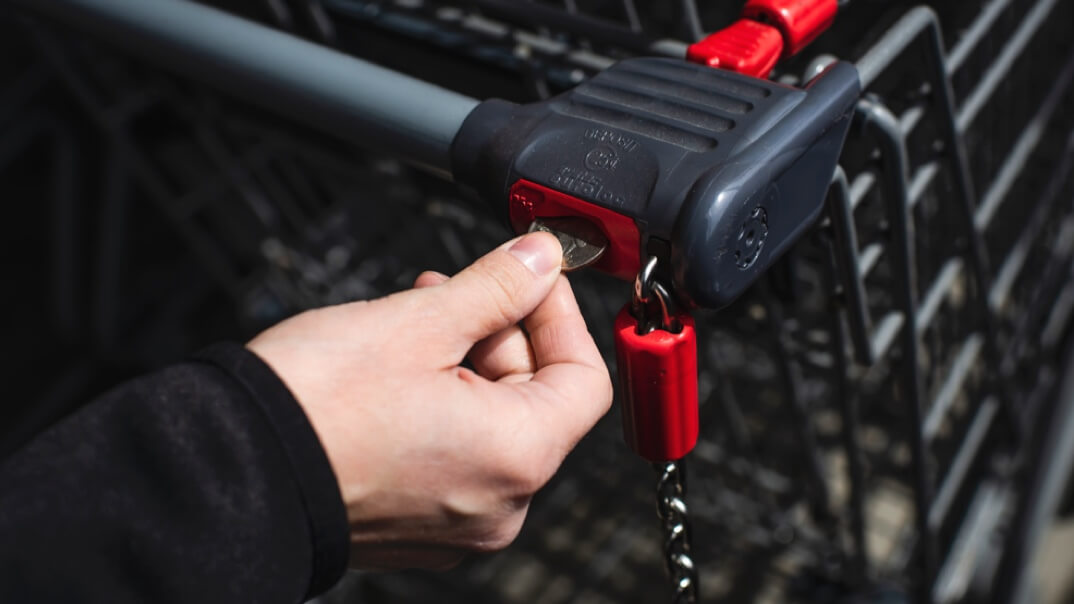
New customers may be jolted at first by the experience of shopping at an Aldi, which expects its customers to endure a number of minor inconveniences not typical at other American grocery stores. Shoppers need a quarter to rent a shopping cart. Plastic and paper bags are available only for a fee. And at checkout, cashiers hurry shoppers away, expecting them to bag their own groceries in a separate location away from the cash register.
But Aldi has built a cult-like following. When it enters a new town, it’s not uncommon for hundreds of people to turn out for the grand opening. The allure is all in the rock-bottom prices, which are so cheap that Aldi often beats Walmart at its own low-price game.
"I am willing to do the extra work because the prices are amazing,” said Diane Youngpeter, who runs a fan blog about the grocer called the Aldi Nerd and an Aldi Facebook group with 50,000 members. “There’s a lot of Aldi nerds out there,” she said. “I didn’t realize that there were so many of us.”
On a recent trip to an Aldi in New Jersey, antibiotic-free chicken was $4.29 a pound. At nearby competitors, Trader Joe’s “All Natural Chicken” and Whole Foods’ “365 Organic Fresh Chicken” were $4.99 and $6.99 a pound, respectively.
Aldi has more than 1,800 stores in 35 states and is focused on growing in the Midwest, the Mid-Atlantic, Florida and California. It’s on track to become America’s third largest supermarket chain behind Walmart and Kroger, with 2,500 stores by the end of 2022. Its close competitor Lidl, another German grocer with a similar low-cost business model, is racing to grow in the United States, too.
Advertisement
Amid their aggressive growth push, the two discount chains have forced the rest of the grocery industry to make big changes to hold onto their customers. Aldi has even encroached on Walmart’s turf— literally. As if it were throwing down a gauntlet, in October Aldi opened a store in Bentonville, Arkansas, just a mile from Walmart’s corporate headquarters.
"I never underestimate them," Foran said at an industry conference in March. “I've been competing against Aldi for 20-plus years. They are fierce and they are good.”
But as competitors fight back, can the company hold on to its low-cost advantage? Can it stick to what it calls the “Aldi way?”
The Aldi way: How the chain beats Walmart on price
There’s no secret to how Aldi keeps its prices so low: The company strips down the shopping experience in an unapologetically and brutally efficient way.
“They are able to drive out every fractional cent of cost without compromising on quality,” said Katrijn Gielens, professor of marketing at UNC's Kenan-Flagler Business School.
Aldi is privately held, and through a spokesperson, the company declined to make its executives available for interviews. But Gielens estimates that its operating costs are about half those of mainstream retailers. The company also operates at a lower profit margin than competitors, she said.
From a customer’s point of view, the distinct experience starts at the shopping carts, which Aldi keeps locked up.
25-cent deposit
Aldi locks up its shopping carts to save on labor costs. Customers deposit a quarter, which they get back when they return the carts.
Rather than employ a team of runners to retrieve carts from the parking lot all day, Aldi expects its customers to return carts to the store after each shopping trip. It forces that behavior by charging customers a quarter deposit that they get back when they return their carts.
This is not a novel idea. Several American grocers tried it in the 1980s and 1990s, but abandoned the practice after it annoyed customers who had come to expect more services of their grocery stores. Aldi, which opened its first US store in Iowa in 1976, has stuck with the model, insisting the deposit system is core to its low-price strategy. The store’s most die-hard fans even celebrate it, heralding when Aldi offers “quarter keeper” keychains from time to time. Some fans even knit their own versions. A search on Etsy for “Aldi quarter keeper” turns up more than 500 results.
“I never underestimate them. I've been competing against Aldi for 20-plus years. They are fierce and they are good.”
Greg Foran, CEO of Walmart's US operations
The quirks don’t stop there.
When customers enter stores, they’ll notice they look almost nothing like traditional supermarkets in the United States. With five or six super-wide aisles, Aldi only stocks around 1,400 items — compared to around 40,000 at traditional supermarkets and more than 100,000 at Walmart supercenters.
Aldi displays products in their original cardboard shipping boxes, rather than stacking them individually, to save employees time stocking shelves.
For time-strapped shoppers like Youngpeter, Aldi’s simple layouts and limited selection save her time. “I’m a busy mom. I don’t have time to navigate a huge grocery store with kids begging to get out and go home,” she said. “I can get in and out of an Aldi in no time. I’m not sifting through 50 different varieties of salsa.”
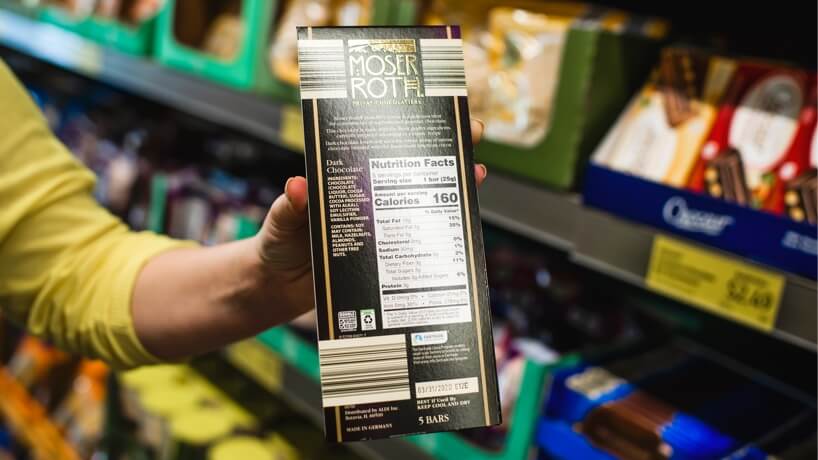
And good luck trying to find major name brands. More than 90% of the brands Aldi sells are its own private labels like Simply Nature organic products, Millville cereals, Burman’s ketchup and Specially Selected bread. (If this sounds like Trader Joe’s, that’s not a coincidence. The two companies share a common history.)
The packaging on these items sometimes looks so similar to the brand-name alternatives that customers find themselves doing a double-take. Aldi's Honey Nut Crispy Oats, for example, come in box that's nearly the same shades of orange, yellow and brown as General Mills’ Honey Nut Cheerios, and with a similar font, too. Aldi sells its Tandil laundry detergent in an orange plastic jug with blue and yellow graphics reminiscent of Tide. The Millville Toaster Tarts, an Aldi house brand, look strikingly similar to Pop-Tarts — but a 12-pack of the Millville version is $1.85 while a 12-pack of Pop-Tarts costs $2.75.
More than 90% of the products Aldi sells are its own private labels. In many cases, the packaging closely resembles familiar brands.
“I’m like, ‘these corn flakes are just as good, if not better, than the ones that have a chicken on the box! They’re the same exact ones,’” said Allison Robicelli, a food writer in Baltimore who describes herself as an Aldi loyalist.
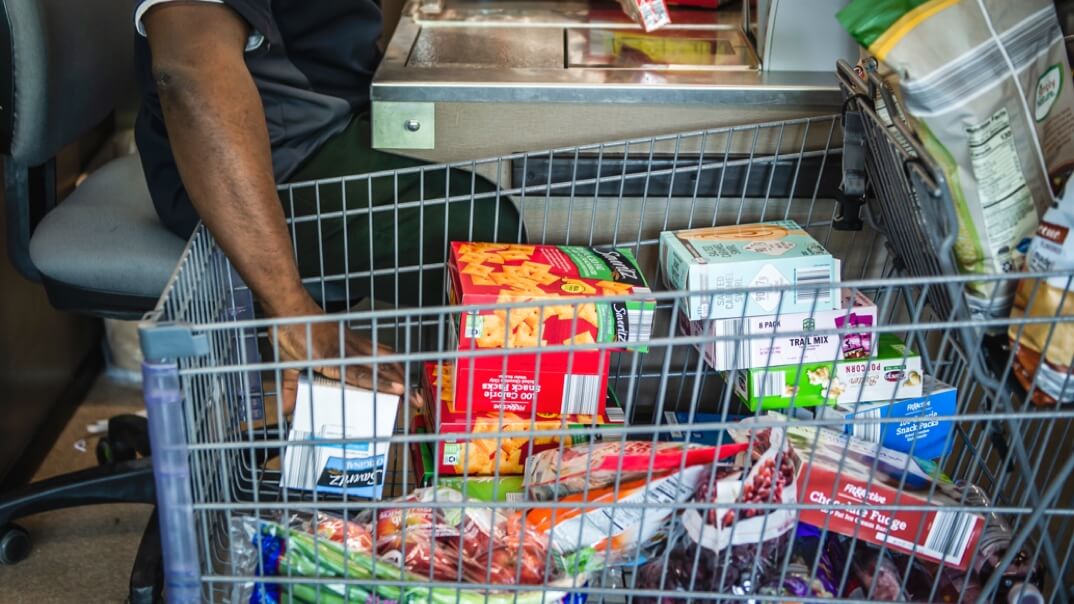
Although it may not be obvious at first glance, Aldi employs several key design details that maximize efficiency at checkout, too. On many of its products, barcodes are either super large or are printed on multiple sides to speed up the scanning process. After groceries are rung up, there’s nowhere for them to linger. The cashier drops items directly into a shopping cart below. Aldi doesn’t waste time bagging groceries. Customers must wheel away their shopping carts to bag their own groceries in a separate section at the front. Since stores don’t offer free bags, customers often scour the store for empty cardboard boxes to use instead.
“Those lines fly. You’re not waiting for people to bag. They’re not messing around there,” said Robicelli. “Once you see that kind of efficiency, it makes going to other supermarkets really annoying and really tedious.”
Speedy cashiers
Another labor-saving trick: Cashiers don’t bag groceries. Instead, they drop items directly into customers’ carts.
Aldi has other tactics to keep real estate and labor costs down. Size is one factor. A Walmart supercenter averages around 178,000 square feet. Costco warehouses average around 145,000 square feet. Aldi’s small box stores, however, take up just a fraction of that space, at 12,000 square feet on average.
1,400 VS 40,000
Aldi only stocks about 1,400 items compared to 40,000 at traditional supermarkets.
And unlike other stores, where there’s a clear division of labor — runners retrieve carts, cashiers ring up customers and clerks stock shelves — Aldi employees are cross-trained to perform every function. Their duties are also streamlined. Aldi displays products in their original cardboard shipping boxes, rather than stacking them individually, to save employees time stocking shelves. Most stores don’t list their phone numbers publicly because Aldi doesn’t want its workers to spend time answering calls.
The result: A single Aldi might have only three to five employees in the store at any given time, and only 15 to 20 on the entire payroll. The company claims to pay its workers above the industry average, but still saves on overall labor costs simply by having fewer people.
All of these cost savings add up and are passed on to customers. Aldi claims its prices are up to 50% cheaper than traditional supermarkets, and independent analysis by Wolfe Research shows its prices are around 15% cheaper than Walmart in markets like Houston and Chicago.
Aldi is investing $1.9 billion in remodeling 1,300 US stores, including expanded frozen and refrigerated sections.
"They've driven prices down, cleverly," Walmart's Foran said. Last year, he noted that when he visited Aldi, a gallon of milk and a dozen eggs each cost 99 cents. Foran said he and his team could not risk losing on those popular items.
Despite the stripped-down store experience, Aldi scores higher on customer satisfaction surveys and benefits far more from word-of-mouth marketing than Walmart and other supermarkets. It has one of the highest Net Promoter Scores — a key measure of how likely customers are to recommend the brand to their friends and family — in the grocery industry, according to Bain & Company.
Cheap kombucha on the shelves, BMWs in the parking lots
After Aldi first entered the United States, it took two decades for the company to expand to 500 stores.
Now, in its rapid growth phase, Aldi is on track to open more than 130 new stores just this year alone.
It’s not uncommon to see luxury cars in Aldi’s parking lots — a detail even a top Walmart executive has noted.
The Great Recession and its slow recovery helped the discount grocer gain popularity among budget-conscious shoppers in the United States. Aldi’s latest expansion builds on that momentum. "Over the last 10 years, they’ve really flourished in the US,” said Mikey Vu, partner at Bain. “There’s instability in the economy. People are worried. They’re paying much closer attention to pennies on their grocery purchases than ever before.”
85%85% of US shoppers say they're open to trying store brands.
Source: Bain & Company survey
Of course, Aldi is not the only discount store growing in retail. TJMaxx, Ross and Burlington are all opening new doors, and their cheap prices have put pressure on department stores. Ollie’s Bargain Outlet and Five Below are growing rapidly. Dollar General has opened up thousands of stores in recent years.
For Aldi, part of its success lies in appealing not only to low or mid-income shoppers, but to wealthier ones as well. Aldi’s core shopper tends to make more money and have a slightly higher education level than the overall grocery shopper, according to Bain. On a recent trip to an Aldi in Hackensack, New Jersey, luxury vehicles, including a $50,000 Jaguar and an $80,000 Tesla Model X, dotted the small parking lot alongside Toyotas, Fords and Hondas. Walmart’s Foran has marveled that when he visited an Aldi in Australia, BMWs and Mercedes were in the parking lot there, too.
“People love saving money on staples. And it would apply to every single person in this room,” he said to an audience of investors and retail executives at a Four Seasons Hotel in Boston. “You feel pretty good if you can save $10 on your grocery bill because it makes you feel better when you go out for dinner on Saturday night and spend $200 at a restaurant.”
In recent years, Aldi has ramped up its efforts to appeal to high-income shoppers by offering more fresh, organic produce as well as imported items like Irish cheese, brioche from France and pastas from Italy. The stores now offer private-label versions of kombucha, cold-pressed juices, an array of gluten-free products and peanut butter powder.
“It used to be the white label knock-off stuff that you were a little bit embarrassed to buy, but it was cheap. Now, people don't care anymore about the big brands the way they used to. That plays right into the Aldi playbook.”
Mikey Vu, partner at Bain & Company
Aldi is investing $1.9 billion to remodel 1,300 stores with natural lighting and refreshed produce, diary and meat sections. Since 2017, its new stores have been concentrated in more populous, upper middle-class suburbs, according to Bain. Aldi’s new stores are in zip codes with a $65,822 household income on average — about $4,500 above the national average. “They’re clearly trying to go after a more upmarket customer,” Vu said.
As part of its plan to attract a broader range of US shoppers, Aldi is offering more specialty products at low prices, including its own peanut butter powder and kombucha.
Part of Aldi’s appeal is not in a lower grocery bill alone, but in the way Aldi cleverly markets its discounts, UNC’s Gielens said. Bargain hunters across the income ladder end up feeling like they’re outsmarting other, higher-priced supermarkets and big brands when they see their grocery receipts. Aiming to be the "smart shopping alternative,” Aldi wants to "spread the message that traditional grocers and brands simply rip off consumers,” she said.
Aldi hammers home that message on its signs in stores. “The same is always better when it costs less.” “New deals every week. Find them here. Brag like crazy.” Aldi encourages customers to ditch their grocery stores: “Switch and save.”
Americans are listening. Last year, 19% of shoppers who switched retailers started buying at Aldi, according to a Morgan Stanley survey. That was second only to Walmart.
More Barcodes
On many products, barcodes are either super large or they're printed on multiple sides to speed up the scanning process at the cash register.
Aldi’s reliance on private-label brands is also helping it win Millennials, who are increasingly brand-agnostic and are instead drawn to lower prices and convenience, according to Bain data. Private-label products have undergone a renaissance in recent years and are now growing faster at supermarkets than the top 20 national brands, Nielsen data shows.
Stores like Trader Joe’s and Costco have built empires selling their own brands. Costco’s Kirkland Signature, for example, raked in nearly $40 billion last year, an 11% increase from 2017. Kirkland’s sales last year beat out Campbell Soup, Kellogg and Hershey put together. Retailers’ brands challenge these consumer goods heavyweights, which spend billions marketing their products.
Advertisement
“It used to be the white label knock-off stuff that you were a little bit embarrassed to buy, but it was cheap,” Vu said of store brands. Now, Bain customer surveys show that 85% of US shoppers say they’re open to trying private label products. “People don't care anymore about the big brands the way they used to," he said. "That plays right into the Aldi playbook."
The “Aldi Finds” aisle, which includes seasonal and quirky items, is popular among regular shoppers.
It all began with a thrifty family
Aldi’s obsession with frugality comes from its early owners: brothers Theo and Karl Albrecht, who took over the family grocery business in Essen, Germany after World War II. Out of necessity, early stores initially stocked only a handful of items, but the brothers planned to expand the selection as the business grew. Over time, however, they recognized that they could be successful selling a narrow range of basics. “If we did not want to offer customers a wide range of products, then we had at least to offer them some other advantage. From that point on, we sold our products for decisively less,” Karl said in 1953, according to a book by former Aldi manager Dieter Brandes.
Theo was so insistent on keeping costs low that he was known to take notes on both sides of a piece of paper and to turn off the lights at stores during the daytime. The brothers purposefully kept store aesthetics to a Spartan minimum. “There are no decorations in stores,” Karl said in 1953. “All of our promotional efforts are put into discount prices.”
In 1961, the brothers split the business in two, reportedly over a dispute over whether to sell cigarettes in stores. Karl took southern Germany, and Theo ran the North. To this day, Aldi Süd and Aldi Nord remain separate companies, with the dividing line between the two in Germany known as the “Aldi Equator.”
Aldi’s stores are smaller than traditional supermarkets and feature wide aisles.
Aldi Süd is the company that’s expanding rapidly now in the United States, as well as throughout Europe. Aldi Nord also has an American presence through Trader Joe’s, which it acquired in 1979 — but its growth is less ambitious than that of its cousin company. Trader Joe’s had 484 stores in United States at the end of 2018.
The Albrecht brothers both passed away within the last decade. Now, the two chains operate in 18 countries, bringing in an estimated $98 billion in combined sales last year, according to Deloitte. That revenue makes the Aldi companies not only one of the largest grocers, but also the eighth biggest retailer in the world. The two Aldis combined are now larger than CVS or Tesco, and just a few rungs down from Amazon, Home Depot and Walgreens Boots Alliance.
Competitors react
Aldi Süd’s rapid growth in the United States mimics its broader international expansion in places like Ireland, Hungary, Switzerland, Australia and even China. The company has also grown quickly in the United Kingdom, where many local grocers ignored Aldi until it was too late.
But as Aldi scales in the United States, there are real concerns about whether it can maintain its low-cost advantage. American competitors have learned to respond faster when Aldi lowers prices, which could blunt its impact.
Customers bag their own groceries at Aldi. It’s yet another way the store saves on labor costs.
“They’ve taken Aldi as a much more credible threat,” Vu said.
Walmart has narrowed its price gap with Aldi since July 2017, according to a study conducted by Wolfe Research analyst Scott Mushkin, who recorded prices of 40 top-selling items at a Houston Walmart and an Aldi across the street from one another. Walmart also narrowed that gap with Aldi in Chicago-area stores, he found.
To counter Walmart and other grocers’ moves, Aldi has started compromising its bare-bones approach. In September, it launched a national advertising campaign, including television commercials, to drive the message that it sells high-quality products. Aldi also recently pledged to cut plastic and transition to 100% sustainable packaging by 2025 — not a cheap endeavor. Aldi increased its fresh food offerings by 40% in 2018 by expanding its produce selection and adding new vegan and vegetarian options. And it started offering more alternative milks, including soy and almond.
Those changes are expensive and could eat away at Aldi’s margins. “The model only works if they are the actual cheapest,” said Simon Johnstone, analyst at Kantar.
“Those lines fly. You’re not waiting for people to bag. They’re not messing around there,” said Allison Robicelli, a frequent Aldi shopper.
Customers also say they’re starting to notice a few more brand-name goods on the shelves, such as Coca-Cola, Tide and Old Spice deodorant. “I honestly don’t like it when they bring in national brands. I like the sanctity of Aldi,” Robicelli said, adding that she worries prices might go up.
At the same time, Aldi faces heightened competition from its closest rival, Lidl. Lidl cut the ribbon on its first US stores in Virginia, North Carolina and South Carolina in 2017 and recently opened three stores outside of Atlanta. It’s expanding in upper income communities, too. Now, Lidl operates more than 60 stores in the country.
Aldi is closely monitoring Lidl’s growth. In a federal lawsuit filed in March, Aldi alleged that two of its former US employees illegally shared confidential information about its sales, future store locations and real estate strategy with Lidl.
A spokesperson for Lidl said the company "believes in fair competition and the allegations in the lawsuit are not consistent with our business practices and values. We are looking into the claims, which we take seriously."
Other American grocers have tried shopping cart deposits but abandoned the practice after it irritated shoppers. Aldi has stuck with the model, insisting it’s core to the store’s low-cost strategy.
Aldi’s lasting impact: Lower prices and fewer grocers
Although huge competitors can reduce prices to compete with Aldi, regional supermarkets are getting squeezed by the grocery price war.
Tops Markets and Southeastern Grocers, the owner of Winn-Dixie and Bi-Lo, have recently filed for bankruptcy. Save-A-Lot, the second-largest discount grocery chain in the United States after Aldi, is deep in debt and can’t afford to continue lowering prices without sacrificing profit.
“Aldi and Lidl will be a significant disrupting force in the US, threatening smaller regional supermarket chains and forcing larger players to cut prices,” Fitch Solutions said in a research report in March.
More bankruptcies are on the way for America’s grocery stores, analysts predict. "The US has a much bigger tranche of second and third tier grocery retailers,” said Vu from Bain. “Those are the ones that are dying off.”
With smaller grocers disappearing, there’s probably room for both Walmart and Aldi to pick up the pieces, Vu added. In the meantime, Aldi will keep leading the price wars, putting pressure on the bigger players, too.
"They're incredibly successful," he said. "We haven't seen a disrupter in the grocery space like this in a long time."
SHANGHAI — Here’s one way to compete with Starbucks in coffee: Pay your customers.
Luckin Coffee, an unprofitable start-up offering big giveaways and aggressive subsidies, burst less than two years ago into a Chinese coffee scene long dominated by Starbucks. Helped by a smartphone app that lets users order coffee for delivery with a few finger taps, it has gained nearly 17 million customers and built 2,370 stores.
Now it plans to sell shares in the United States, with trading set to begin on Friday. If successful, the unprofitable and still-untested company could be worth as much as $4 billion.
The question, for investors, is whether Luckin’s fast-growth, cash-burning model still works in an era of diminished expectations for once-hot technology companies. Just last week, Uber conducted an ultimately disappointing initial public offering.
“You need to take some time for these companies to become profitable,” Ringo Choi, managing partner for China at EY, the consulting firm. “Not all will become the next Amazon and not all of them have the fundamentals to sustain them.”
Luckin offers proof that China’s weakened tech start-up scene still has some of its old pop.
In recent years, new Chinese companies have burst into prominence, raising and burning money at a pace that would make Silicon Valley blush. Bike-sharing start-ups popped up overnight, flooding cities with tens of millions of rainbow-colored dockless bikes. A boom in online food and retail delivery has left the streets of Beijing and Shanghai cluttered with delivery men in bumblebee yellow or blue helmets and suits, the colors of the two most dominant delivery companies.
Luckin hopes to buck that trend and challenge Starbucks as the reigning king of a tea-drinking country that only relatively recently discovered the joys of java. Starbucks, the Seattle-based coffee chain, holds just over half of the Chinese coffee and specialty tea market, according to Euromonitor International, a market research provider. By the end of 2018, Luckin held just over 2 percent of the market, according to Euromonitor estimates.
Image
Delivering Luckin Coffee in Beijing. To compete with Starbucks in China, Luckin has focused on offering delivery and steep customer discounts.CreditWang Zhao/Agence France-Presse — Getty Images
But the growth opportunities are huge. In the span of just four years, China’s specialty tea and coffee market has grown from $2.7 billion in revenues to $4.8 billion, Euromonitor says. The market is still diffuse, as well. The next biggest competitor to Starbucks, the McDonald’s owned McCafe, has just 5 percent of the market.
Luckin has grown rapidly since its founding in late 2017. It was begun by the entrepreneur Jenny Qian Zhiya and has been backed by several investment firms in China, the United States and Singapore, including BlackRock. It plans to increase its storefronts to have the largest coffee chain network in China by the end of this year. That would catapult it past Starbucks, which has 3,600 stores in China.
Sustaining that growth depends in large part on whether Luckin can keep its customers. On social media, some people rave about its cheap and convenient coffee. They praise it for coming up with specialty drinks that appeal to the varied tastes of Chinese consumers, like a concoction it calls guava cheese ruby tea.
Others deride its taste and say its coffee is just an overpriced version of convenience store sludge.
Several times a week, Liu Zhiyan, 34, likes to walk over to the Luckin near her work to get a jolt of caffeine. “Luckin is not as good as Starbucks, the flavor is not so rich,” Ms. Liu said. She used to drink Starbucks once a week but has found herself buying coffee more frequently because Luckin’s coffees are cheaper.
“The price is low,” Ms. Liu said. “You get what you pay for.”
A spokesman for Luckin declined to comment, citing a quiet period before the initial public offering on the Nasdaq Stock Market.
Luckin coffee is priced similarly to Starbucks coffee but then offers steep discounts. Most of its espresso-based coffees cost between $3.50 and $4, but customers rarely pay the full price because of daily discounts of 50 percent or more. Luckin gives away its first coffee to a new subscriber to its app. A friend referral to the app gets customers another free coffee.
Luckin also lures coffee drinkers with big promotions, resulting in huge sums of money going back into the pockets of customers.
Image
If Luckin’s plan to sell shares in the United States is successful, the unprofitable and still-untested company could be worth as much as $4 billion.CreditRoman Pilipey/EPA, via Shutterstock
One current promotion encourages customers to buy seven or more items in a week, either individually or within a group, putting them into a pool of similar customers. At the end of the week everyone in the pool will get a cut of 5 million renminbi, or about $723,000. Each participant in last week’s pool took home $4, the company said. Over the 10 week program, Luckin tells its customers, it will give them back more than $7 million.
Those offers would eat into Luckin’s profits, if it had any. Money spent on growth led the company to record a net loss of $475 million in 2018. So far this year, the company has racked up losses of $85 million.
Though they both sell coffee, Luckin and Starbucks approach the China market in different ways. Luckin depends heavily on takeout and delivery, a popular option in a country where people like to order meals on their smartphones. Luckin also runs small stores where customers can pick up their coffee, check out the latest discounts or learn about other offers.
Starbucks, by contrast, usually offers roomy stores known as a comfortable place to hang out, a refuge from prying parents or a crowded family apartment. Its green-and-white logo holds an aura of affluence in China, and the company has won intense loyalty among many people there.
“I have never gone to Luckin,” said Zhang Sheng, a recent college graduate who drinks coffee three times a week. “I am loyal to Starbucks because they have good loyalty program.”
Starbucks has its own expansion plans, with a goal of nearly doubling its China stories by 2022. Still, in a nod last summer to its new competitor, Starbucks announced a partnership with e-commerce giant Alibaba to provide delivery of its coffee through Alibaba’s subsidiary, Ele.me. Representatives for Starbucks did not respond to requests for comment.
The next big question for Luckin is how it can start making money. It is unclear whether customers who like Luckin’s discounted coffee will be willing to fork over the full price once those discounts are lifted.
For Owen Sun, a 31 year old who works in product placement for a luxury company, Luckin provides fast coffee when he is too busy to leave work. But he is a fickle consumer, and on a recent day was waiting in a long line at a Shanghai coffee shop called Manner.
“To be honest, Starbucks does a better job in packaging the coffee,” Mr. Sun said. “If the price of Luckin coffee went to $4 with no coupons, I might buy Starbucks.”
Amazon.com Inc. and British food delivery startup Deliveroo make in some ways cosier bedfellows than Uber Technologies Inc. does with its own competing service, Uber Eats.
The U.S. e-commerce giant led a $575 million financing round in London-based Deliveroo on Friday. One can’t help but wonder whether the investment is an amuse-bouche for a broader tie-up, a chance for Amazon to get a detailed look under the hood of Deliveroo’s operations before evaluating an acquisition. There are a lot of reasons why that would make sense.
There’s the obvious one: Amazon wants a food delivery service. It shuttered the London operations of Amazon Restaurants last year amid a fierce price war with Deliveroo, Uber Eats and Just Eat Plc. But there’s merit in maintaining a presence in app-based food delivery services. Platforms in Latin America and India are already extending into products such as pharmaceuticals and groceries, and that approach could spread to other regions. That poses a threat to Amazon, not least because users tend to access food delivery apps more regularly, according to Chris Caulkin, a venture capital investor with General Atlantic in London.
The Deliveroo network of couriers must also appeal to Amazon. If you can ensure that the people making your deliveries have little or no downtime, they can make more money and are therefore less likely to go and work for a rival, since they are paid for each delivery they complete. If they are able to transport both goods from Amazon Prime Now, which promises deliveries within two hours, and Deliveroo meals, then the likelihood of downtime is reduced.
Deliveroo’s push into so-called “dark kitchens” might also help with Amazon’s logistics. These are facilities which aren’t attached to a physical restaurant, often housed in shipping containers on affordable sites dotted around London. While the model remains unproven, the idea is to reach more customers without the pricey overheads that come with an actual restaurant. Those locations could also act as last-mile fulfilment centers for Amazon, and Deliveroo plans to use many of the proceeds from the latest fundraising to open new sites.
The brand cachet of Deliveroo, which tries to focus on convenience rather than fast food, meanwhile aligns well with Amazon’s goals: it appeals to a similar customer base as Whole Foods, the high-end health food store that Amazon acquired in 2017.
The fresh influx of cash means that European food delivery price wars are likely to continue unabated, which is reflected in the share-price drop of rival services.
The key difference between Amazon/Deliveroo and Uber/Uber Eats is that, on the whole, the people who deliver food for Uber Eats are not the same as the ones who ferry customers around for Uber. Though there is of course technological crossover in the systems that manage the two products, the operational crossover is more limited. That exposes Uber to high driver and deliverer churn, where they are more likely to jump to a rival that can guarantee more income.
Nonetheless, it’s sensible for Amazon to start with a venture capital investment in Deliveroo rather than an outright takeover, as it was reported that the two firms investigated last year. There’s plenty of skepticism, not least from me, about how profitable food delivery can really be, and whether it can sustain its growth. Deliveroo made a loss of 184 million pounds ($234.8 million) on revenue of 277 million pounds in 2017, the most recent year for which data is available. The business remains unproven, and concern about the path to profitability was a factor in Uber’s disappointing initial public offering this month.
An Amazon/Deliveroo tieup could ease concerns about profitability. But it’s also wise for the Seattle-based firm to test how viable it would be to team up before committing to an acquisition.
To contact the author of this story: Alex Webb at awebb25@bloomberg.net
To contact the editor responsible for this story: Jennifer Ryan at jryan13@bloomberg.net
This column does not necessarily reflect the opinion of the editorial board or Bloomberg LP and its owners.
Alex Webb is a Bloomberg Opinion columnist covering Europe’s technology, media and communications industries. He previously covered Apple and other technology companies for Bloomberg News in San Francisco.
Amazon lead a $575 million funding round in the UK-based food delivery company Deliveroo, continuing its efforts to diversify into the takeaway market. In a press release Deliveroo said it would use the money to expand its UK engineering team, expand its delivery reach, and continue to develop new products such as its delivery-only kitchens. Deliveroo currently operates in 500 towns and cities across 14 countries and territories.
The investment will intensify Amazon’s competition with rival tech company Uber and its Uber Eats service. The Financial Times reported last year that Uber was interested in buying Deliveroo outright, but that talks stalled after the two companies failed to agree on a valuation. Sky News reports that Amazon’s investment in Deliveroo follows two unsuccessful approaches to buy Deliveroo outright.
This isn’t Amazon’s first foray into the food delivery market. It launched its own takeaway service, Amazon Restaurants, in the US back in 2015, and expanded it to the UK the following year. Just over two years later, however, it shut down the service in the face of stiff competition from the likes of Uber Eats and Deliveroo.